We independently review everything we recommend. When you buy through our links, we may earn a commission. As an Amazon Associate we earn from qualifying purchases.
Best Battery for 2001 BMW Z3: Group 48 (H6) AGM Picks That Fit the Trunk Tray
The 2001 BMW Z3 takes a Group 48 (H6) battery. Compare four AGM options from WEIZE, Mighty Max, OPTIMA and Goodyear by CCA, reserve capacity and trunk fitment.
2. Mighty Max MM-H6 — start-stop rated, same Group 48 case
Best for: owners who like the idea of a cycling-tolerant AGM at the same specification as the default pick, and who are willing to verify the warranty wording on the listing.
3. OPTIMA YellowTop DH6 — the strongest specification here
Best for: stored cars, seasonal cars and modified Z3s with meaningful accessory loads, where reserve capacity and cycling tolerance matter more than shaving weight.
The 2001 BMW Z3 takes a Group 48 (H6) battery. Compare four AGM options from WEIZE, Mighty Max, OPTIMA and Goodyear by CCA, reserve capacity and trunk fitment.
As an Amazon Associate we earn from qualifying purchases.
Affiliate Disclosure: This article contains affiliate links. If you buy through a link on this page, we may earn a commission at no additional cost to you. Product specifications are taken from the manufacturers’ listings, and we have not personally tested these batteries.
The 2001 BMW Z3 does not take an unusual battery. Every engine sold in the US that year — the 2.5i, the 3.0i and the M Roadster and M Coupe with the 3.2-litre six — uses a BCI Group 48 battery, also labelled H6 or L3 in European sizing. Fitment catalogues list Group 48 for the full 1996–2002 Z3 run, with a factory cranking range of roughly 730 to 800 cold cranking amps. All four batteries below are Group 48 AGM units inside that range, so the real decision is about reserve capacity, how the car is used, and how the battery behaves in a car that often sits between drives.
That last point matters more on a Z3 than on a daily-driven sedan. Many surviving Z3s are second cars. They sit in garages for weeks, run short trips, and carry a small but constant parasitic draw from the clock, alarm and control modules. A battery that starts the car once is not enough; it has to recover from sitting, tolerate partial discharge, and still crank a straight six on a cold morning. That is why this guide favours AGM batteries over basic flooded units, and why reserve capacity gets as much attention as the headline CCA figure.
The four picks at a glance
Battery
Group size
CCA
Capacity
Reserve capacity
Best for
WEIZE Platinum AGM Group 48
48 / H6
760
70 Ah
120 minutes
Balanced everyday replacement
Mighty Max MM-H6
48 / H6
760
70 Ah
120 minutes
Start-stop rated AGM in the same footprint
OPTIMA YellowTop DH6
48 / H6
800
72 Ah
140 minutes
Cars that sit, and cars with extra electrical loads
Goodyear 48-H6-AGM Platinum
48 / H6
760
70 Ah
120 minutes
A familiar brand name in the correct case size
1. WEIZE Platinum AGM Group 48 — the balanced default
Top Pick
1. WEIZE Platinum AGM Group 48 — the balanced default
Best for: most 2.5i and 3.0i owners who want a like-for-like Group 48 AGM with solid reserve capacity and no fitment drama.
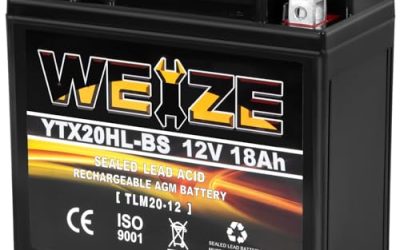
The WEIZE Platinum AGM in Group 48 form is the most straightforward answer to this keyword. Its listing states 12 volts, 70 amp-hours, 760 cold cranking amps and a 120-minute reserve capacity, in a case measuring about 10.94 by 6.89 by 7.48 inches — the standard H6 footprint that drops into the Z3 trunk tray without shims or bracket work. The listing also describes a 36-month warranty, which is worth confirming on the product page before ordering, because warranty terms are handled by the seller rather than at a local counter.
For a 2001 Z3, 760 CCA sits comfortably inside the factory range quoted by fitment catalogues, so cold starts are not the weak point here. The more useful number for a weekend car is the 120 minutes of reserve capacity: that is the buffer that keeps the car starting after a fortnight of sitting with the alarm armed. AGM construction helps in the trunk specifically. The battery is sealed, it does not need topping up, and it tolerates the vibration of a stiffly sprung roadster better than a basic flooded case.
There are two honest cautions. First, some secondary summaries of this listing have shown conflicting capacity and cranking figures in different parts of the page, so read the current listing carefully and match the label on the battery you receive against what you ordered. Second, like every battery in this guide, it still needs the Z3’s vent arrangement respected. Connect the vent hose as the factory intended rather than leaving the trunk compartment sealed against the battery.
2. Mighty Max MM-H6 — start-stop rated, same Group 48 case
Runner-Up
2. Mighty Max MM-H6 — start-stop rated, same Group 48 case
Best for: owners who like the idea of a cycling-tolerant AGM at the same specification as the default pick, and who are willing to verify the warranty wording on the listing.
owners who like the idea of a cycling-tolerant AGM at the same specification as the default pick, and who are willing to verify the warranty wording on the listing.
The Mighty Max MM-H6 is built to almost the same headline specification as the WEIZE: Group Size 48, 12 volts, 70 amp-hours, 760 CCA and a 120-minute reserve capacity, in the same roughly 10.94 by 6.88 by 7.48 inch case. Mighty Max positions it as a start-and-stop battery, which is irrelevant to a 2001 Z3 — the car has no stop-start system — but the underlying point is useful: a battery designed for frequent cycling and deep discharge recovery is a reasonable match for a car that gets started, driven briefly, and parked again.
The manufacturer describes the MM-H6 as sealed and spill-proof, with high discharge output and the ability to recover after deep discharge. It can also be mounted in multiple positions as long as it is not inverted, which matters less in a stock Z3 trunk than in a modified car, but it does confirm the case is a true sealed AGM rather than a flooded battery with a sealed-looking lid. Mounting screws are listed as included.
Where the Mighty Max asks for a little more homework is paperwork rather than performance. Warranty descriptions for this model have appeared differently in different listings, so check the exact warranty term shown on the Amazon product page at the time you buy and keep the documentation. Also confirm the terminal layout — positive on the right, negative on the left in the listing data — against your old battery before the car is apart, because Z3 cables do not have much slack to cross over.
3. OPTIMA YellowTop DH6 — the strongest specification here
3. OPTIMA YellowTop DH6 — the strongest specification here
Best for: stored cars, seasonal cars and modified Z3s with meaningful accessory loads, where reserve capacity and cycling tolerance matter more than shaving weight.
stored cars, seasonal cars and modified Z3s with meaningful accessory loads, where reserve capacity and cycling tolerance matter more than shaving weight.
The OPTIMA YellowTop DH6 carries the highest numbers in this group: 800 cold cranking amps, 72 amp-hours of C20 capacity and 140 minutes of reserve capacity, again in a Group 48 case of about 10.94 by 6.89 by 7.48 inches and with a 36-month guarantee stated in the listing data. OPTIMA describes the YellowTop line as a true dual-purpose AGM, intended for vehicles whose electrical loads are higher than average or whose discharge cycle goes beyond simple engine starting.
That dual-purpose brief maps well onto two kinds of Z3. The first is the stored car: the one on a battery maintainer half the year, taken out for club runs, and expected to start first time after sitting. The extra reserve capacity is a genuine buffer there. The second is the modified car: upgraded audio, additional lighting, or other accessories that draw real current. A starting-only battery resents that treatment; a dual-purpose design is built for it.
OPTIMA attributes its vibration resistance to its plate construction, using highly compressed radial grid plates made from very pure lead, and the battery is maintenance-free with versatile mounting. The trade-offs are weight and purpose. At around 54 pounds in the listing data it is the heaviest option here, and if your Z3 is a standard car driven weekly, you may never use the extra cycling ability you are carrying. Buy it for the usage pattern, not for the badge.
4. Goodyear 48-H6-AGM Platinum — the familiar name in the right size
4. Goodyear 48-H6-AGM Platinum — the familiar name in the right size
Best for: owners who want a mainstream brand in the correct Group 48 case and are happy to verify the details on the listing before ordering.
The Goodyear 48-H6-AGM is listed as a BCI Group Size 48 battery with 12 volts, 70 amp-hours, 120 minutes of reserve capacity and 760 CCA, sold as a rechargeable, maintenance-free AGM in the brand’s Platinum series. On paper it matches the WEIZE and the Mighty Max figure for figure, which is typical of this size class: the H6 case and the electrical targets are standardised, so brands compete on consistency, support and availability rather than on wildly different specifications.
For the Z3, that standardisation is good news. It means the Goodyear drops into the same tray, meets the same factory cranking range and suits the same engines as the other three. If you are replacing a battery away from home, or you simply prefer a tyre-shop brand name you recognise, this is a defensible route to the same result.
The caution is the mirror image of its strength. Because the headline figures are identical to two other batteries in this guide, do not pay attention to the name alone — check the current listing for the group size, the terminal layout and the warranty wording, and confirm the battery that arrives is the 48-H6-AGM and not a neighbouring size from the same range. Group 49 and Group 94R batteries look similar in a photograph and do not belong in a stock Z3 tray.
What actually fits a 2001 Z3 — and what does not
Group size is the first filter and the one most often got wrong. Fitment sources consistently list Group 48, also called H6 or L3, for the 1996–2002 Z3 across engines, and parts catalogues for Group 48 batteries list the Z3, including the 2001 model year, in their application tables. The case is roughly 11 inches long, just under 7 inches wide and about 7.5 inches tall. That footprint, the hold-down arrangement and the terminal positions are what make a battery a Z3 battery.
Group 94R, also called H7, is the common mistake. It is longer, it appears in many later BMWs, and some listings suggest it for European cars generally. In a Z3 it does not sit correctly under the trunk trim, and forcing the cover down over terminals is a short-circuit risk, not a harmless squeeze. Group 49 is longer again. If a listing’s fitment checker suggests either size for a 2001 Z3, trust the group size printed in your owner’s documentation and the label on the battery you are removing over the checker.
A second Z3-specific point: the battery lives in the trunk, not under the bonnet. That has three consequences. Heat ageing is slower than in an engine bay, which is kind to battery life. Venting matters, because the compartment is enclosed, so keep the factory vent path connected. And access means removing trunk trim rather than lifting a bonnet, so weigh the battery before you start — these AGM units are heavy, and the lift out of a Z3 trunk is awkward rather than difficult.
Finally, a reassurance for owners of newer BMWs who have heard about battery registration: the Z3 predates BMW’s Intelligent Battery Sensor system. Registration applies to later cars, not to a 2001 Z3. You still need to reset the clock and, on some cars, re-enter a radio code after disconnection, but there is no registration procedure standing between you and a finished job.
AGM or flooded in a Z3?
The factory specification can be met by a conventional flooded battery, and fitment catalogues describe the original fitment as a regular battery, with AGM as an upgrade many owners choose. The case for AGM in this particular car rests on use, not fashion. A Z3 that sits for weeks self-discharges more slowly on AGM, recovers better from the deep-ish discharge that sitting causes, and does not spill or need water in a trunk compartment where checking electrolyte levels is a nuisance. AGM also tolerates vibration well, which suits a short-wheelbase roadster on firm suspension.
The case against is simpler: if your Z3 is a daily driver doing regular longer trips, a quality flooded Group 48 will start it reliably and the AGM advantages will rarely show themselves. All four picks in this guide are AGM because the typical surviving 2001 Z3 is no longer a daily driver, but the reasoning is stated so you can disagree with it for your own car.
Whichever chemistry you choose, a maintainer is the cheapest life-extender available for a stored Z3. Repeated deep discharge shortens the life of any lead-acid battery, AGM included. The reserve capacity figures quoted above buy you time between drives; they do not make the battery immune to neglect.
How to choose among the four
Start with how the car lives. Driven weekly on real journeys: the WEIZE or the Goodyear covers the factory specification with room to spare, and the choice between them can rest on the listing details and warranty wording on the day. Driven monthly, stored over winter, or kept on a maintainer: the OPTIMA’s 140 minutes of reserve capacity and dual-purpose design earn their place. Somewhere in between, with lots of short trips: the Mighty Max’s cycling and deep-discharge recovery brief is aimed at exactly that pattern.
Then check the unglamorous details before ordering any of them. Measure your existing battery or read its group size label. Photograph the terminal layout and the vent hose connection. Confirm the listing’s stated dimensions match the H6 footprint. And after fitting, check charging voltage at the terminals with the engine running — a new battery installed on a car with a failing alternator or a parasitic drain will be blamed for a problem it did not cause. On a 25-year-old car, testing the drain with the car asleep is worth the effort before you condemn a second battery.
Installation notes for the Z3 trunk
Disconnect the negative terminal first and reconnect it last. Keep the hold-down clamp snug rather than overtightened; the case needs to be immovable, not crushed. Reconnect the vent hose. Clean terminal corrosion before fitting rather than after, and protect the posts once the clamps are on. After installation, start the car and let it idle while you check for warning lights, then take a drive long enough for the alternator to replace the charge used in cranking. If the car will sit again immediately, connect the maintainer once it is parked.
If your old battery failed suddenly rather than fading, test before you simply replace. A battery that will not hold charge in a Z3 is sometimes reporting a stuck relay, a boot light that never switches off, or an aftermarket accessory wired to a permanent feed. Fitting one of the batteries above to a car with an unresolved drain gives you a newer flat battery, not a repair.
Verdict
For most 2001 Z3 owners, the WEIZE Platinum AGM Group 48 is the sensible default: correct size, 760 CCA inside the factory range, and 120 minutes of reserve for a car that sits. The OPTIMA YellowTop DH6 is the step up for stored and modified cars, with the strongest specification in this guide. The Mighty Max MM-H6 and the Goodyear 48-H6-AGM reach the same headline figures by different routes — cycling tolerance on one side, a familiar name on the other. Any of the four is a correct Group 48 answer; the wrong answers are the neighbouring group sizes, whatever a generic fitment checker suggests.
S
Softlavender Editorial Team
We compare specs, materials and verified owner reviews before a product earns a spot. Rankings are never paid.
Affiliate disclosure. As an Amazon Associate we earn from qualifying purchases at no extra cost to you. Prices accurate as of the date shown.
Five handheld pool vacuums compared on runtime, debris capacity, filtration and pole fit, with picks for spas, small pools and full-size spot cleaning.
The best underbody rust protection keeps salt and moisture off your frame. Compare five lanolin sprays, rubberized coatings and rust paints for trucks.
Find the best tractor hydraulic fluid for your machine: five trans-hydraulic options compared by spec, size and cold-weather flow for a confident fill.
Engine coolant thermostats for Subaru cars, not home thermostats: genuine 21210AA080 and 21210AA030 kits plus 21200AA072 replacements matched by part number and opening temperature.
A sand battery stores heat, not electricity, in tonnes of hot sand. Learn how the Polar Night Energy concept works, why there is no consumer home version to buy, and what home energy storage options exist at concept level.
Replacement batteries for Polaris RZR side-by-sides in the correct YTX20L-BS and YTX20HL-BS powersports sizes, with fitment checks, CCA and capacity compared, and charging and installation guidance.
Three quilt kits for a handmade wedding present, compared by size, fabric and pattern: a heirloom coverlet, a pre-cut floral kit and a fat-quarter set.


 4. Goodyear 48-H6-AGM Platinum — the familiar name in the right size