We independently review everything we recommend. When you buy through our links, we may earn a commission. As an Amazon Associate we earn from qualifying purchases.
Best Double Pole Thermostat for Electric Baseboard Heaters
Find the best double pole thermostat for a 240V baseboard heater. Compare five double-pole line-voltage thermostats by voltage, amps, wiring, and controls.
Find the best double pole thermostat for a 240V baseboard heater. Compare five double-pole line-voltage thermostats by voltage, amps, wiring, and controls.
A best double pole thermostat is the right control when a 240V electric baseboard, convector, or fan-forced heater needs a wall thermostat that disconnects both legs of the circuit. A double-pole design breaks both hot wires when the heater cycles off, which gives a true off position and a cleaner shutoff than a single-pole control that leaves one leg live. That difference matters most on 240V circuits, where both wires carry current.
The quick answer: the Honeywell TL8230A1003 is the strongest all-round pick for most rooms because it combines double-pole switching with 7-day programming and quiet electronic control. If you want the simplest possible control, the Cadet double pole wall thermostat is a sturdy manual dial with a wide voltage range and a 22-amp rating. The other picks below cover smart control, a higher load rating, and a dedicated 240V manual option, so match the thermostat to your heater voltage, load, and wiring before choosing by features alone.
Quick Picks
Our Short List of 3
Editor’s Choice
1. Honeywell TL8230A1003: Best Overall Double Pole Thermostat
A double-pole thermostat, also written as DPST, switches both legs of a 240V circuit. A single-pole thermostat switches only one leg and leaves the other connected, so the heater can still carry voltage even when the control is turned down. Check the product description for the words double pole, DPST, or 4-wire. A 4-wire line-voltage thermostat is built for circuits where both legs are switched. If a listing does not state the pole count, check the wiring diagram before buying.
Match the Voltage
Most double-pole thermostats are made for electric baseboard heat at 240V, and many also accept 208V or 120V. The Cadet wall thermostat in this guide covers 120, 208, and 240 volts, while the YeloDeer pick is made for 240V only. Never fit a 240V-only control to a 120V circuit, or a 120V control to a 240V circuit. Read the heater nameplate first, then confirm the thermostat rating covers that exact voltage.
Match Amps and Watts
Voltage alone is not enough. Add up the wattage of every heater the thermostat will control and compare the total with the thermostat rating, keeping the load comfortably inside the stated limit. The Honeywell TL8230A1003 is rated for 15 amps, which covers up to 3,600 watts at 240V. The Cadet wall thermostat handles 22 amps, or up to 5,280 watts at 240V. The Dr. Infrared DR-001 goes further at 28 amps and up to 6,720 watts at 240V. A thermostat that is undersized for the heater load can overheat, so this is the single most important safety check in the whole purchase.
Choose Manual, Programmable, or Smart Control
A manual dial is the simplest option and the easiest to live with in a guest room, rental, or room that stays at one temperature. A programmable thermostat such as the Honeywell TL8230A1003 adds a 7-day schedule, so the room can warm up before you wake and cool down while you are out. A smart thermostat such as the Mysa LITE adds app control, voice control, and remote scheduling, but it also needs Wi-Fi, a phone app, and four wires. Pick the control style that matches how the room is actually used.
Check the Wiring and Wire Count
Double-pole line-voltage thermostats use four wires: two bringing power in and two taking switched power out to the heater. Before ordering, switch the breaker off, remove the old thermostat cover, and count the wires in the wall box. Two-wire boxes are common with older single-pole installations and may need new cable run by an electrician before a double-pole thermostat can be fitted. The Mysa LITE also needs a neutral wire or a second live wire, so a two-wire switch loop will not work with it. If the wiring is unclear, a photo of the open box is exactly what an electrician needs to advise you.
Look at Temperature Range and Positive Off
A useful dial or setpoint range for living space runs from about 40 to 80 degrees Fahrenheit, which covers frost protection at the low end and comfortable heating at the high end. A positive off position is worth having because it disconnects the heater completely rather than simply turning the setpoint down to its minimum. The Cadet, Dr. Infrared, and YeloDeer manual controls in this guide all include a positive off position. On a programmable model, look instead for a clear off or hold mode and a display that is easy to read in a dim hallway.
Check Heater Compatibility and Safety
Double-pole thermostats are made for resistive electric heat: baseboards, convectors, radiant ceilings, and fan-forced wall heaters. They are not made for 24V central heating and cooling systems, heat pumps, or heaters driven by a contactor or relay. The Cadet built-in style controls are a separate case again, since they mount inside a specific heater series rather than on the wall. Line-voltage wiring carries full mains current, so always switch the breaker off before touching wires, confirm the circuit is dead, and hire a licensed electrician if anything about the circuit, the load, or the wiring is uncertain.
The Best Double Pole Thermostat Reviewed
1. Honeywell TL8230A1003: Best Overall Double Pole Thermostat
Top Pick
1. Honeywell TL8230A1003: Best Overall Double Pole Thermostat
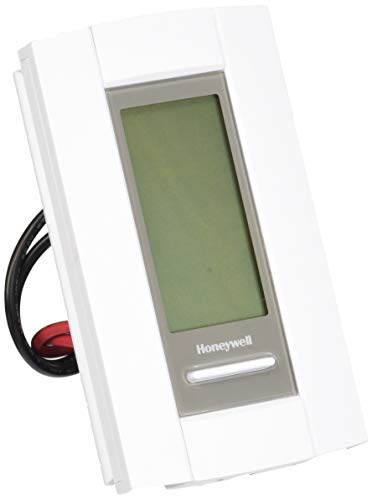
The Honeywell TL8230A1003 is the best double pole thermostat for most homes because it pairs true double-pole switching with a 7-day programmable schedule and quiet electronic control. It is a line-voltage thermostat for electric baseboards, convectors, and fan-forced heaters running on 208 or 240 volts, with a 15-amp resistive rating that covers up to 3,600 watts at 240V. Four switching periods per day can be set for each day of the week, and an early-start function brings the room up to the programmed temperature by the scheduled time rather than starting to heat at that time.
Operation is quiet because the thermostat uses soundproofed electronic switching instead of a clicking mechanical relay, which makes it a good fit for a bedroom. The large backlit display is easy to read in low light, and the temperature can be set from 40 to 86 degrees Fahrenheit. A temporary override changes the temperature without rewriting the schedule.
This thermostat suits a room that follows a regular routine, such as a bedroom, home office, or living room heated by a baseboard. It is not the right pick for a circuit above 15 amps, and it is not made for 120V heaters or for low-voltage central heating systems. Confirm the heater load first, because a single large baseboard can approach the rating on its own. For scheduled comfort with a true off through both legs of the circuit, it is the most complete pick in this guide.
The Cadet Double Pole Line Voltage Thermostat is the best double pole thermostat for buyers who want a plain manual dial and nothing else. It is a mechanical wall control for electric baseboard, fan-forced wall, and convector heaters, rated for 120, 208, and 240 volts at up to 22 amps. That covers up to 5,280 watts at 240V or 2,640 watts at 120V, which is enough for most single-room heater loads and several smaller heaters wired to one control.
Its double-pole, 4-wire design switches both circuit legs when the heater cycles off, and the dial includes a positive off position for a definite shutoff. The dial covers 40 to 80 degrees Fahrenheit and turns with a simple twist, so there is no display to read, no battery to change, and no schedule to program. That simplicity is the point: it works in a rental, a workshop, a guest room, or any space where the heat stays at one setting for long stretches.
There are clear limits. It has no schedule, no remote control, and no display, so the temperature is set by dial position rather than by a number on a screen. It also needs line-voltage wiring and a four-wire box, so it is not a drop-in replacement for a two-wire single-pole control. For a straightforward wall control that covers three voltages and a generous load, it is the most forgiving pick in this guide.
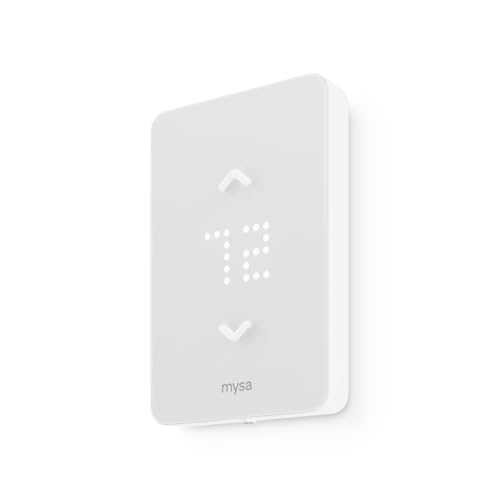
The Mysa Smart Thermostat LITE is the best double pole thermostat for buyers who want app and voice control over electric baseboard heat. It is a line-voltage smart thermostat for 120 or 240 volt electric baseboards, fan-forced wall heaters, convectors, and radiant ceiling heat, rated for up to 16 amps and 3,800 watts at 240V. It supports both single-pole and double-pole wiring, so it fits a four-wire double-pole installation as well as a simpler two-wire setup, provided the wiring requirements below are met.
Control runs through the Mysa app, with a 7-day schedule, remote adjustment, geofencing, and vacation mode, plus support for common voice assistants and smart home platforms. The on-device buttons still work without the app, so the room can be adjusted by hand when a phone is not nearby. Scheduling by day makes it a strong fit for a room that is used at set times, such as a home office that only needs heat on weekdays.
The wiring requirement is the part to check before ordering. Mysa needs four wires, including a neutral wire or a second live wire, and it does not work with a two-wire switch loop or with 24V HVAC systems. It also needs Wi-Fi for remote features, so it is a poor fit for a property without reliable wireless coverage. As a smart control that genuinely supports double-pole wiring, rather than a low-voltage smart thermostat dressed up for baseboards, it earns its place here, but only for four-wire installations.
The Dr. Infrared Heater DR-001 is the best double pole thermostat for circuits where the heater load is too large for a standard 15 or 22 amp control. It is a manual wall thermostat rated for 120 to 277 volts at up to 28 amps, which covers up to 6,720 watts at 240V. That headroom suits a large room, a long run of baseboard, or several heaters controlled from one point, where a smaller thermostat would be undersized.
The control works with single or double pole circuits, so it can be wired to switch both legs on a 240V installation. Two dials are included, one marked in Celsius from 5 to 32 degrees and one in Fahrenheit from 41 to 90 degrees, and the large knob and positive off position keep operation direct. There is no programming, no display, and no app, which keeps the control simple and removes anything that needs batteries or Wi-Fi.
The wide voltage range is a strength and a reason for care in equal measure: it does not remove the need to match the thermostat to the heater and the circuit. A 28-amp rating is only useful if the breaker, the cable, and the heater load are all rated for the circuit as installed. For a high-load manual control that can be wired double-pole, it is the strongest option in this guide, but buyers should confirm the circuit rating with an electrician before relying on the headline number.
The YeloDeer 240V 4-Wire Manual Thermostat is the best double pole thermostat for a heater and circuit that are both 240V and nothing else. It is a manual, non-programmable wall control for compatible electric baseboards, convectors, and fan-forced heaters, rated for 240V only at up to 20 amps and 4,800 watts. Its 4-wire design is made for 240V circuits where both legs are switched, and indicator lights show the connection point and whether heating is taking place.
The dial adjusts continuously across a 40 to 80 degree Fahrenheit range, and the control has a positive off position. There is no schedule, no display, and no remote access, which suits a room that needs one steady temperature or a replacement control for an existing 240V installation where the wiring already matches. The clear 240V-only marking is genuinely useful: it stops the control being fitted by mistake to a 120V heater, where it would not work as intended.
The limitation is written on the box. It is not for 120V heaters, even if the wiring at the wall looks similar, and the 20-amp limit means the total heater load must be checked before ordering. It is also a manual control, so anyone who wants schedules or app control should look at the Honeywell or Mysa picks instead. For a dedicated 240V manual replacement, it is a focused and honest option.
Start with the heater nameplate and the breaker panel, not with the thermostat features. Note the heater voltage, the total watts on the circuit, and the breaker rating, then choose a thermostat whose voltage range and amp rating cover all three.
Next, open the wall box with the breaker off and count the wires. A double-pole installation needs four wires, and smart models such as Mysa also need a neutral or second live wire. If the box has only two wires, budget for an electrician to run new cable or choose a control that matches the existing wiring.
Then decide how the room is used. A manual dial suits a steady temperature. A programmable model suits a room with a daily routine. A smart model suits a room you want to adjust from elsewhere. Finally, confirm the thermostat is made for resistive electric heat and not for a 24V system. A low-voltage thermostat looks similar on the wall but is built for a completely different circuit, and fitting one to a line-voltage heater is a serious error.
Frequently Asked Questions
What is a double pole thermostat?
A double pole thermostat is a line-voltage thermostat that switches both hot wires of a 240V circuit. When it turns the heater off, both legs are disconnected, which gives a true off position. A single-pole thermostat switches only one leg and leaves the other live, so it cannot fully disconnect the heater.
Do I need a double pole thermostat for a 240V baseboard heater?
A double pole thermostat is the usual choice for a 240V baseboard heater because both wires in the circuit carry current. It gives a positive off and disconnects the heater completely. Most 240V installations use double-pole controls for that reason.
Can a double pole thermostat work on 120V?
Some double pole thermostats are rated for 120, 208, and 240 volts, such as the Cadet wall thermostat in this guide. Others, such as the YeloDeer pick, are rated for 240V only. Always check the voltage range printed on the thermostat and the heater nameplate, and never fit a 240V-only control to a 120V heater.
How many amps does a double pole thermostat need to handle?
It needs to handle the total load of every heater wired to it, with headroom to spare. Add up the watts of all heaters on the circuit and divide by the voltage to find the amps. The picks in this guide range from 15 amps for the Honeywell TL8230A1003 to 28 amps for the Dr. Infrared DR-001, so match the rating to the load rather than choosing by features first.
Can I install a double pole thermostat myself?
A confident homeowner can often replace a like-for-like line-voltage thermostat, but the work involves full mains current. Switch the breaker off, confirm the circuit is dead before touching any wire, and follow the included wiring diagram exactly. If the wire count, the load, or the circuit rating is unclear, hire a licensed electrician.
Bottom Line
The best double pole thermostat depends on the circuit first and the features second. For most rooms, the Honeywell TL8230A1003 is the strongest all-round pick, with double-pole switching, a 7-day schedule, and quiet electronic control for loads up to 15 amps. The Cadet wall thermostat is the simplest choice, covering 120, 208, and 240 volts at 22 amps with a manual dial and a positive off. The Mysa LITE adds app and voice control for four-wire installations, the Dr. Infrared DR-001 covers the largest loads at 28 amps, and the YeloDeer 4-wire control is a focused manual option for dedicated 240V heaters. Confirm the voltage, total heater load, and wire count before ordering, and involve an electrician if any check is uncertain.
Disclosure: As an Amazon Associate, we may earn from qualifying purchases.
S
Softlavender Editorial Team
We compare specs, materials and verified owner reviews before a product earns a spot. Rankings are never paid.
Affiliate disclosure. As an Amazon Associate we earn from qualifying purchases at no extra cost to you. Prices accurate as of the date shown.
Find the best rechargeable RV van conversion batteries for your build. Compare LiFePO4 house batteries on capacity, size, cold-weather charging and warranty.
Get the best PSP battery life with proven settings, smart charging habits and replacement-battery checks that help your PlayStation Portable last longer.
Find the best lithium starting battery for your motorcycle, ATV, or boat. Compare LiFePO4 cranking power, group size, CCA, and BMS protection before you buy.
Find the best battery powered commercial lawn equipment for pro crews: mowers, blowers, trimmers, chainsaws and hedge trimmers compared on power and runtime.
Find the best truck bed extenders for ladders, kayaks, lumber and long cargo. Compare hitch-mount and tailgate models, capacities and fit before you buy.


 3. Mysa Smart Thermostat LITE: Best Smart Double Pole Thermostat
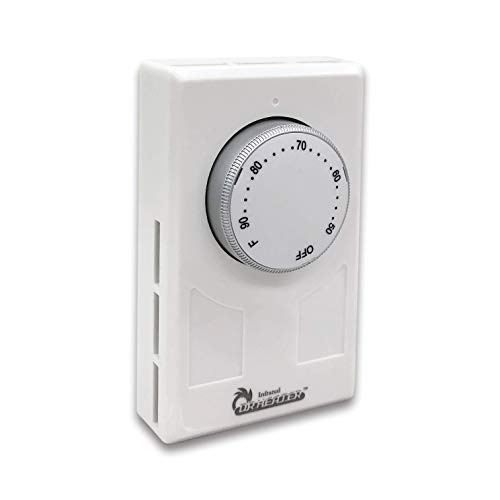 4. Dr. Infrared Heater DR-001: Best Double Pole Thermostat for Higher Loads
 5. YeloDeer 240V 4-Wire Manual Thermostat: Best Dedicated 240V Option