We independently review everything we recommend. When you buy through our links, we may earn a commission. As an Amazon Associate we earn from qualifying purchases.
Best Bike Brand for Kids 2: Five Brands Worth a Look for Young Riders
Looking for the best bike brand for kids 2? Compare Woom, Strider, RoyalBaby, JOYSTAR and Schwinn on sizing, safety, weight and value for young riders.
Looking for the best bike brand for kids 2? Compare Woom, Strider, RoyalBaby, JOYSTAR and Schwinn on sizing, safety, weight and value for young riders.
Searching for the best bike brand for kids 2 can feel harder than it should. Every brand claims to make the lightest frame, the safest brakes and the easiest first ride, yet the bikes themselves differ enormously in weight, geometry, sizing and the age range they genuinely suit.
Quick answer: For most families, the best bike brand for kids 2 comes down to matching the brand to the child’s age and stage. Strider leads for first balance bikes, Woom leads for lightweight pedal bikes, RoyalBaby and JOYSTAR cover affordable first pedal bikes with training wheels, and Schwinn makes a widely available BMX-style starter with a long track record. There is no single winner for every child, so use the guide below to match the brand to your rider.
Age ranges on the box are a rough guide, not a rule. Two children of the same age can differ by several inches in height, and height and inseam decide whether a bike fits. Measure your child’s inseam by standing them against a wall with shoes on and measuring from the floor to the inside of the leg. On a pedal bike, your child should be able to sit on the saddle and touch the ground with the balls of both feet. On a balance bike, both feet should sit flat on the ground with a slight bend in the knees. A bike that is too large is hard to control and harder to stop, while a bike that is too small gets outgrown in a single season. Wheel size is the shorthand most brands use: 12 inch wheels suit toddlers, 14 and 16 inch wheels suit children roughly three to seven years old, and 18 and 20 inch wheels suit older children. Always check the brand’s own height chart before ordering, because one brand’s 16 inch bike can fit differently from another’s.
Weight Matters More Than It Looks
A kids bike that weighs half as much as the child riding it is a burden, not a toy. Children have less strength relative to their body weight than adults, so every extra pound makes starting, steering and stopping harder. Lightweight aluminium frames are the main reason premium kids brands cost more, and the difference is easy to feel when you lift the bike with one hand. Steel frames are sturdier and cheaper, and many good starter bikes use them, but a steel 16 inch bike can weigh close to twice as much as an aluminium equivalent. If your child will carry the bike up steps, lift it onto a car rack or ride up even gentle slopes, weight deserves a place near the top of your list.
Balance Bike or Pedal Bike
Children who have never ridden before usually learn faster on a balance bike than on a pedal bike with training wheels. A balance bike has no pedals, chain or training wheels, so the child scoots along with their feet and learns balance and steering first, which are the hard parts. When they move to a pedal bike later, they already know how to balance, so the transition is often quick and free of tears. Training wheels teach pedalling but not balance, and children can become dependent on them, leaning on the extra wheels instead of learning to balance. That said, training wheels suit some children well, especially older beginners who want to ride with friends straight away, and many family bikes include removable training wheels so you can take them off when the child is ready. Choose the path that fits your child’s confidence: a cautious toddler does well starting on a balance bike, while a confident five-year-old may go straight to a pedal bike.
Brakes Your Child Can Actually Use
Brakes are a safety feature only if small hands can operate them. Coaster brakes, which work by pedalling backwards, need no hand strength and suit very young riders, but they make it impossible to position the pedals for starting, and they do not work if the chain comes off. Hand brakes give better control and teach real braking technique, but only if the levers are sized for small hands and set close to the handlebar. The best kids bikes use short-reach levers designed for children, not adult levers fitted to a small frame. If possible, have your child squeeze the brake levers before you buy, or check that the levers are adjustable. A bike with both a coaster brake and a rear hand brake gives a beginner a backup while they learn. Whatever the setup, practise stopping in a safe, flat area before the first ride on a path shared with other people.
Geometry Built for Children
A good kids bike is not a shrunken adult bike. Children have shorter arms, shorter legs and a higher centre of gravity relative to their size, so the frame, handlebars, cranks and saddle need to be designed around a child’s proportions. Child-specific geometry puts the rider in a comfortable, upright position with easy reach to the handlebars and brakes, and uses shorter cranks so little legs can pedal in full circles without the knees rising too high. Narrow handlebars match narrow shoulders, and a low stand-over height lets the child step off safely. Brands that specialise in kids bikes tend to get these details right, while general brands sometimes fit adult components to a small frame. Look for a low top tube, a saddle that adjusts easily, and grips sized for small hands.
Durability and After-Sales Support
A kids bike leads a rough life. It gets dropped on driveways, left out in the rain, ridden through puddles and passed down to younger siblings. A sturdy frame, rust-resistant hardware and puncture-resistant tyres all help a bike survive more than one childhood. Check what the warranty covers and for how long, and whether spare parts such as brake pads, inner tubes and training wheels are easy to find. Brands with a long history in the market usually have better parts availability and clearer warranty terms. If you plan to hand the bike down or sell it on, a well-known brand with a reputation for durability will hold its appeal better than an unknown label.
The Best best bike brand for kids 2 Reviewed
Woom
Woom is the brand many cycling families name first when lightness and child-specific design matter most. The Austrian company builds bikes only for children, and every model, from the 12 inch balance bike to the 24 inch junior bike, uses a lightweight aluminium frame with geometry scaled to a child’s body. The representative pick here is the woom GO 3, a 16 inch pedal bike for children around four to six years old, with a handbrake, a steering limiter that stops the handlebars from jackknifing, and a full chain guard. At around 13 pounds, it is far lighter than most steel bikes of the same size, which makes it easier for a child to start, steer and stop. The trade-off is availability through Amazon: the woom GO listings on Amazon showed as currently unavailable when checked, with no featured buying options on the listing pages, so this brand is best bought direct from the woom store rather than through Amazon. That is a real drawback if you prefer one-stop shopping, but the bike itself is widely regarded as one of the best-built kids bikes available. If your budget stretches to a premium bike and you want the lightest, most carefully designed option, Woom is hard to beat.
Representative bike: woom GO 3 Bicycle, 16 inch, for children 4 to 6 years old.
Note: No Amazon link is included for this brand because the woom GO listings on Amazon showed as currently unavailable when checked. Check the woom store directly for current stock.
Strider practically invented the modern balance bike category, and the Strider 12 Sport remains the benchmark first bike for toddlers. It suits children from around one to four years old, with a steel frame, flat-free foam tyres that never need pumping, a padded seat and a handlebar safety pad. The seat and handlebar adjust without tools, so the bike grows with the child across more than one season. Its weight of around 6.7 pounds is light enough for a small child to handle, and the low stand-over height lets a toddler step on and off with confidence. The obvious limitation is that it has no pedals, so it is a first-stage bike rather than a complete solution: your child will still need a pedal bike later, which makes the total cost of learning to ride higher than buying a single pedal bike with training wheels. For a toddler’s very first bike, though, few products teach balance as effectively, and the 12 Sport is the model that most balance-bike brands are measured against. Choose the colour your child likes, since enthusiasm is half the battle at this age.
Representative bike: Strider 12 Sport Balance Bike, Blue, for kids 1 to 4 years.
RoyalBaby is a specialist kids bike brand with a strong record in affordable first pedal bikes, and the Freestyle is its best-known line. The 14 inch Freestyle suits children around three to five years old and comes with removable training wheels, a water bottle and a bell, so it is ready to ride with very little extra spending. The BMX-style frame has wide 2.4 inch tyres that add stability for a beginner, and the dual braking setup gives a child both a coaster brake and a hand brake. RoyalBaby also backs the frame and front fork with a lifetime warranty, which is generous at this end of the market. The compromise is weight: the 14 inch Freestyle weighs around 22 pounds, which is heavy for a small rider, and the steel frame is the main reason. The bike also uses training wheels rather than the balance-first approach, so some children may take longer to ride without support. For families who want a complete, ready-to-ride first pedal bike without a premium price tag, the Freestyle is a practical and popular choice.
Representative bike: RoyalBaby Freestyle Kids Bike, 14 inch, Red, with training wheels, for ages 3 to 5 years.
JOYSTAR builds cheerful, beginner-friendly kids bikes in a wide range of colours and themes, and the Little Daisy is its most recognisable model for young girls. The 16 inch Little Daisy suits children around four to seven years old and comes with removable training wheels, a handbrake, an enclosed chain guard and a basket, so it arrives looking like a gift rather than a piece of sports equipment. The steel frame is sturdy rather than light, and the single-speed drivetrain keeps things simple for a child who is still learning to steer and brake. JOYSTAR sells the same bike in 12, 14, 16, 18 and 20 inch sizes, so a child who loves the brand can stay with it as they grow. The styling is unashamedly aimed at girls, with pink frames, flowers and a doll seat on some versions, which will delight some children and leave others cold; the brand also makes plainer models for boys under names such as Pluto and Whizz. For a first pedal bike that a young rider will be excited to unwrap, the Little Daisy is a strong pick.
Representative bike: JOYSTAR Little Daisy Kids Bike, 16 inch, Pink, with training wheels, for ages 4 to 7 years.
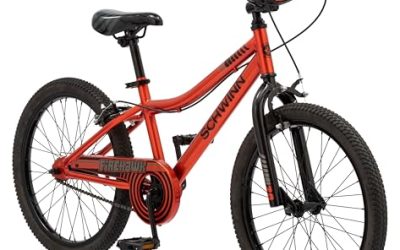
Schwinn is one of the oldest names in American cycling, and the Koen and Elm range is its main line for young children. The 16 inch Koen suits children around three to seven years old, or roughly 38 to 48 inches tall, and uses the brand’s SmartStart design, which scales the frame, saddle, handlebars and brake levers to a child’s proportions rather than shrinking adult parts. It comes with training wheels, a rear coaster brake and a front caliper brake, plus a saddle handle that lets a parent steady the bike during the first rides and a chain guard and number plate that give it a BMX look children tend to like. Schwinn’s scale is a practical advantage: the bikes are widely stocked, spare parts are easy to find, and the brand’s sizing guidance is well tested. The Koen is a steel-framed bike, so it is heavier than a premium aluminium bike, and like other training-wheel bikes it teaches pedalling before balance. For a widely available, sensibly designed first pedal bike from a brand with more than a century of history, the Koen is a safe and popular choice.
Representative bike: Schwinn Koen and Elm Kids Bike, 16 inch, Blue, with training wheels, for ages 3 to 7 years.
What to Check Before You Buy
Measure your child before you order, and compare the numbers with the brand’s own size chart rather than relying on age alone. Check whether the bike arrives mostly assembled or needs full assembly, and whether the tools are included. Confirm that training wheels are included if your child needs them, and that they can be removed later. Look at the brake setup and make sure your child’s hands can reach and squeeze the levers. Check the maximum weight recommendation if an older or taller child will ride the bike. Read the warranty terms and note what is covered and for how long. Finally, buy a helmet at the same time, and make sure it fits snugly and sits level on the child’s head. A bike is only part of the package; the helmet, and a safe place to practise, matter just as much.
FAQ
What is the best bike brand for kids 2 for a first bike?
For a toddler’s very first bike, Strider is the strongest pick, because the 12 Sport balance bike teaches balance before pedalling and suits children from around one year old. For a first pedal bike, Woom leads on weight and design, while RoyalBaby, JOYSTAR and Schwinn provide good value with training wheels included.
What size bike does a four-year-old need?
Most four-year-olds fit a 14 or 16 inch bike, depending on their height and inseam. Measure the inseam and check it against the brand’s size chart, and make sure your child can touch the ground with the balls of their feet while seated. When in doubt between two sizes, the smaller one is usually easier to control and builds confidence faster.
Are balance bikes better than training wheels?
Balance bikes usually teach riding faster, because the child learns balance and steering first and adds pedalling later. Training wheels teach pedalling first and suit older beginners or children who want to ride with friends immediately. Many families use a balance bike first and move to a pedal bike without training wheels at all.
How much should a kids bike weigh?
Lighter is better, but a realistic target depends on the size. A 12 inch balance bike can weigh under 7 pounds, while a 16 inch pedal bike in aluminium can weigh around 13 pounds and a steel equivalent can weigh more than 20 pounds.
Should I buy a bike my child can grow into?
A bike that is slightly large can work if your child can still reach the ground and the brakes, but a bike that is far too large is unsafe and discouraging. Children grow quickly, so it is tempting to size up, but a bike that fits now teaches riding far better than one they will fit next year. Adjustable seats and handlebars give you some growing room without buying too large.
Bottom Line
The best bike brand for kids 2 is the one that fits your child’s size, stage and confidence. Strider is the pick for a toddler’s first balance bike, Woom is the pick if you want the lightest and most carefully designed pedal bike, and RoyalBaby, JOYSTAR and Schwinn all make solid, affordable first pedal bikes with training wheels. Measure your child, favour light weight and brakes small hands can use, and choose the bike your child is excited to ride, because the best bike is the one that gets ridden.
Disclosure: As an Amazon Associate, we may earn from qualifying purchases.
S
Softlavender Editorial Team
We compare specs, materials and verified owner reviews before a product earns a spot. Rankings are never paid.
Affiliate disclosure. As an Amazon Associate we earn from qualifying purchases at no extra cost to you. Prices accurate as of the date shown.
Find the best bike for youth with our guide to sizing, brakes, gears and frame fit for older children and teens, plus four youth bikes to consider first.
Looking for the best bike for overweight riders? Compare heavy-duty fat tire bikes, cruisers and tricycles with high weight limits for a comfortable ride.
Discover the best bike brands UK riders trust, from Brompton folding bikes to Pashley classics. Compare heritage, styles and standout models before you buy.
Looking for the best battery powered kettle? This guide covers true rechargeable kettles, boil times, capacity, safety features and what to check first.
Find the best touring bike pedals for loaded rides: dual-sided SPD, flat platform and clipless picks with platform size, axle standard and weight compared.
Find the best MTN bike grips for trail riding, with lock-on fit, diameter, length and compound explained so you can choose comfortable, secure grips today.
Looking for the best bike for city biking? Compare hybrid and comfort city bikes for commuting and errands, with fit, gear and brake guidance to choose well.
Looking for the best 250 MX bike on Amazon? Read this first: no true 250cc MX bike is sold there. See the two verifiable 223cc picks and the dealer benchmarks.
Bambu P3C vs Snapmaker U1 compared on build volume, speed, multi-material printing, materials, software and ease of use to help you pick the right printer.


 JOYSTAR
 Schwinn