Key takeaways
- Five garden gloves compared on published specs: bamboo knit, nitrile-coated nylon, water-resistant leather, a rose gauntlet, and a fitted premium pair.
A good pair of garden gloves disappears on the hand: fingers stay nimble enough to pinch out a seedling, palms keep their grip on a damp trowel, and skin comes back inside free of blisters, splinters, and rose scratches. The wrong pair bunches at the fingertips, soaks through in the first wet bed, and gets left on the potting bench by the second weekend.
This guide compares five garden gloves that cover the main ways people actually garden: a nitrile-coated classic sold in a four-pack, a feather-light bamboo knit, a water-resistant leather hybrid, an elbow-length gauntlet for thorny shrubs, and a form-fitting premium pair with sun protection built in. Each pick is listed with its published specs, so the choice comes down to the work you do most and the fit your hands need.
As an Amazon Associate, we earn from qualifying purchases.
Quick answer
For most gardeners, the SHOWA Atlas 370 Garden Club gloves are the pair to buy first: a seamless nylon liner with a nitrile-coated palm, in a four-pack of assorted colors. Choose the Pine Tree Tools bamboo gloves on a tight budget, the Wells Lamont HydraHyde hybrid for wet beds and heavier digging, the HANDLANDY gauntlet for roses, and the Foxgloves Original for a fitted feel with UPF 50+ coverage.
The 5 Best Garden Gloves
SHOWA Atlas 370 Garden Club Gloves (4-Pack)

The Atlas 370 is the glove professionals reach for when the work is mostly fingers: setting out seedlings, tying in tomatoes, pinching suckers, and handling small pots. A seamless nylon liner keeps the inside smooth, and the nitrile coating covers the palm and fingers while the back stays uncoated and breathable. That split design is the whole appeal: grip and soil resistance where the hand meets the tool, airflow where it does not.
The Garden Club version bundles four pairs in assorted colors, which suits real garden life better than a single precious pair. One set lives by the back door, one in the shed, and a muddy pair can dry on the line while a clean pair goes out. Gardeners with lavender beds and herb borders will appreciate how much fingertip feel survives the coating; thinning a row of seedlings is genuinely doable in these.
The limits are honest ones. A knit glove is not thorn armor, and the coating will wear at the fingertips after a season of hauling stone or rough timber. Treat the four-pack as the everyday glove it is, and keep a leather pair for the heavy days.
Specs
- :
- Liner: Seamless nylon knit
- Coating: Nitrile on palm and fingers
- Back: Uncoated and breathable
- Pack: 4 pairs, assorted colors
- Sizes: Small, medium, large
- Model: NT370
Pine Tree Tools Bamboo Gardening Gloves

The budget pick in this guide, and the lightest glove here. Pine Tree Tools knits these from a bamboo-blend fiber that feels cool against the skin and wicks moisture on warm afternoons, then adds a nitrile coating over the palm and fingers for grip. The result is a thin, flexible glove with a genuine barehand feel: tying twine, sowing seed, and plucking ripe beans all stay easy.
An extended knit cuff keeps soil from sneaking in at the wrist, a small detail that matters when you are potting up or working in loose compost. The size range runs wide, from small through 2XL, so households with several gardeners can each claim a pair. For kitchen gardens, container collections, and long sessions of light weeding, this is a lot of glove for the tier.
What it is not is armor. Bamboo knit and a thin coating give minimal defense against thorns, and rough work like stacking firewood or clearing bramble will shorten its life quickly. Buy it for dexterity and comfort, and let a leather glove take the punishment jobs.
Specs
- :
- Material: Bamboo-blend knit fiber
- Coating: Nitrile on palm and fingers
- Cuff: Extended knit wrist
- Fit: Thin, barehand feel
- Sizes: Small through 2XL
- Use: Light gardening, planting, weeding
Wells Lamont Women’s HydraHyde Leather Hybrid Gloves (3250M)

The HydraHyde hybrid is the glove for damp mornings and heavier work. Its palm is cowhide leather treated with Wells Lamont’s HydraHyde process, which makes the leather water-resistant so it stays supple instead of stiffening after a soaking. The back of the hand is spandex, which stretches as the fist closes around a fork handle and lets heat escape better than an all-leather build.
An adjustable wrist closure seals the gap where soil and grit usually pour in, and the leather palm shrugs off the abrasion that shreds knit gloves: dragging pots across gravel, gripping rough timber, and digging in stony ground all suit this pair. The fit is cut for women’s hands, with sizes from small to large, and the blue color is easy to spot when the gloves are set down in the grass.
Leather always trades a little fingertip feel for durability, and this pair is no exception; sowing fine seed is easier in the knit gloves above. As the one pair to own for mixed work in a real garden, though, the hybrid earns its place.
Specs
- :
- Palm: HydraHyde water-resistant cowhide leather
- Back: Spandex stretch fabric
- Wrist: Adjustable closure
- Fit: Women’s sizing, small to large
- Color: Blue
- Model: 3250M
HANDLANDY Rose Pruning Gloves (1601)
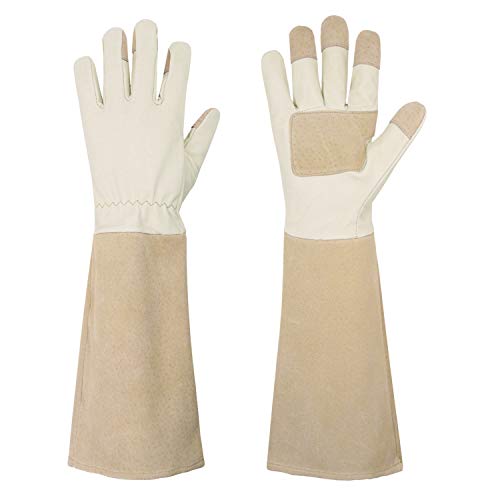
Some jobs end at the wrist, and some run to the elbow. The HANDLANDY gauntlet is built for the second kind: pigskin leather over the hand, then a long cuff that covers the forearm to just below the elbow. Reach into a rose bush, a holly, or a tangle of blackberry canes and the thorns meet leather the whole way.
Pigskin is a smart choice here because it stays flexible and breathes better than stiff cowhide, so the glove remains wearable through a long pruning session rather than only for five brave minutes. The listed pair measures about 16.5 inches overall and weighs 6.4 ounces, light enough that the protection does not come with arm fatigue. Gardeners who tend old roses, pyracantha hedges, or cactus plantings will feel the difference on the first use.
This is a specialist, not an all-rounder. The gauntlet is more glove than a morning of deadheading needs, and the long cuff can feel warm in midsummer. Keep it for thorny work and it will quietly save a great deal of skin.
Specs
- :
- Material: Pigskin leather
- Cuff: Elbow-length gauntlet
- Length: About 16.5 inches overall
- Weight: 6.4 ounces
- Use: Rose pruning, thorny shrubs, cactus
- Model: 1601
Foxgloves Original Gloves
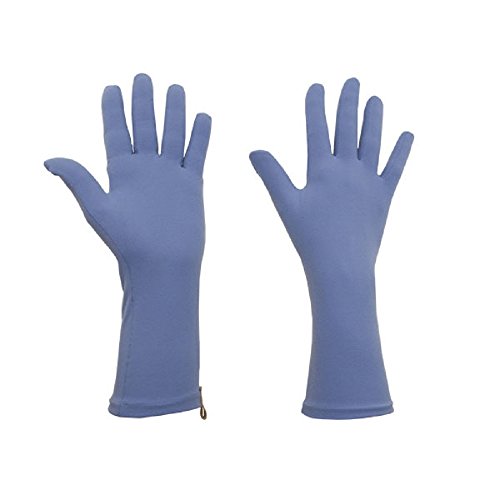
The premium pick, and the glove for gardeners who dislike gloves. Foxgloves cuts its Original from a form-fitting stretch knit that sits close like a second skin, with silicone grip dots across the palm and fingers doing the work a coating usually does. Sensitivity is the point: stems, ties, and small tools are felt rather than guessed at, and the close fit means no loose fingertip fabric to catch on a trellis.
The cuff runs longer than a standard work glove, bridging the gap between sleeve and hand, and the fabric carries a UPF 50+ rating for sun protection, which matters for fair skin during long summer sessions. Colors run from periwinkle to moss and iris, in small, medium, and large. The gloves are machine washable, so a muddy pair goes in with the laundry instead of stiffening on a shelf.
The trade-offs are the familiar ones for a light, fitted glove: thorn defense is modest, and the fine fabric rewards gentle handling. For bed work, herb gardens, and long gentle days among the lavender, it is the most comfortable glove in this guide.
Specs
- :
- Material: Nylon and elastane stretch knit
- Grip: Silicone dots on palm and fingers
- Sun protection: UPF 50+ rating
- Cuff: Extended length
- Care: Machine washable
- Model: W0003
How to choose
Match the glove to the roughest job it will face each week. Thorn work calls for leather that covers the forearm, so a gauntlet is the right call for roses and brambles. Wet beds and heavy digging favor a leather palm with a stretch back. Delicate work, sowing, tying, and transplanting, rewards a thin coated knit that preserves fingertip feel.
Fit matters more than any single feature. A glove that is too large bunches at the fingertips and blisters the palm; too small, and the seams strain and split. Measure around the palm, check the maker’s size chart, and prefer a snug fit in knit gloves, since the fabric relaxes slightly with wear.
Finally, think in pairs rather than a pair. Most gardeners end up happiest with two: a light coated knit for daily work and a leather glove for thorns and timber. Buying the light glove in a multi-pack keeps a dry pair in rotation while another dries after a wet morning.
Who should skip
Skip garden gloves entirely if your gardening is a few container plants on a balcony tended with hand tools; a single light pair from this list, or none at all, will do. Skip the gauntlet if you grow no thorny plants, since the long cuff adds warmth and bulk you will never use. Skip the thin knit gloves if your main work is clearing rough ground, stacking stone, or handling wire fencing; those jobs call for heavy work gloves from the hardware shelf instead. And skip leather if you garden mostly in wet soil and dislike maintaining it, because a coated knit dries faster and asks for no care at all.
Frequently asked questions
What glove material is best for wet soil?
A nitrile-coated knit handles wet soil best, because the coating sheds water and keeps its grip on damp tools while the uncoated back dries quickly. Water-resistant leather such as the HydraHyde palm is the better pick when wet work also involves rough materials.
How do I choose the right garden glove size?
Measure around your palm just below the knuckles and compare the number with the maker’s size chart rather than guessing from clothing sizes. Knit gloves should feel snug at first and will relax a little; leather should allow a full fist without the seams pulling hard.
Can garden gloves protect against rose thorns?
Yes, if they are leather. A pigskin or cowhide gauntlet that covers the forearm stops rose thorns along the whole reach into the bush. Thin knit and coated gloves soften scratches but a determined thorn will pass through, so keep them for beds and borders instead.
How do I wash garden gloves?
Shake off dry soil first. Knit and synthetic gloves can go in a cool machine wash and then air dry away from direct heat. Leather gloves last longer wiped clean with a damp cloth and dried slowly at room temperature, never on a radiator.
Final verdict
The SHOWA Atlas 370 Garden Club four-pack is the best garden glove set for most people: dexterous, breathable, and easy to keep in rotation. The Pine Tree Tools bamboo gloves are the light, gentle budget choice, and the Wells Lamont HydraHyde hybrid covers wet beds and heavier digging in one pair. For roses and brambles, the HANDLANDY gauntlet protects to the elbow, and the Foxgloves Original is the premium pick for a fitted feel with sun protection. Choose by the roughest job in your week, and your hands will thank you all season.
Product and ASIN Reference
| Product | ASIN |
|---|---|
| SHOWA Atlas 370 Garden Club Gloves (4-Pack) | B001BVHZHS |
| Pine Tree Tools Bamboo Gardening Gloves | B07ZWFR3H9 |
| Wells Lamont HydraHyde Leather Hybrid Gloves (3250M) | B0892RVJJV |
| HANDLANDY Rose Pruning Gloves (1601) | B078N3CWT5 |
| Foxgloves Original Gloves | B006C61X0C |