We independently review everything we recommend. When you buy through our links, we may earn a commission. As an Amazon Associate we earn from qualifying purchases.
5 Best Spray and Rinse Wheel Cleaners (November 2026)
Looking for the best spray and rinse wheel cleaner 2 for brake dust? We compare 5 spray-on, rinse-off formulas for coated, chrome and black wheels.
Looking for the best spray and rinse wheel cleaner 2 for brake dust? We compare 5 spray-on, rinse-off formulas for coated, chrome and black wheels.
A spray-and-rinse wheel cleaner promises the easiest wash in the garage: spray it on, wait a few minutes, rinse it off, and the brake dust is gone. The catch is that the wrong formula can stain a finish that cost far more than the bottle. High-alkaline cleaners cut grease fast but can dull polished aluminum and powder coat, while gentle pH-balanced gels need more dwell time on baked-on dust. Picking the right bottle means matching chemistry to the wheels you actually own, not just grabbing the strongest spray on the shelf.
This guide is for daily drivers who want a quick weekly wash, weekend detailers chasing a spotless finish, and owners of coated, chrome, or black wheels who need a formula that will not damage the surface. Every cleaner below was chosen from the names and specifications on its Amazon product page, with the finish safety, dwell time, and bottle size stated up front so you can match the bottle to your wheels.
Quick Picks
As an Amazon Associate we earn from qualifying purchases
Product
Best for
Key spec from title
SONAX Wheel Cleaner Full Effect
Visible iron reaction on coated wheels
500 ml color-changing spray
Meguiar’s Ultimate All Wheel Cleaner
Safe first bottle for any wheel finish
24 oz acid-free gel
Meguiar’s Hot Rims All Wheel & Tire Cleaner
Factory-coated wheels and tire sidewalls
24 oz Xtreme Cling foam
Chemical Guys Diablo Gel Wheel Cleaner
Weekly washing from one concentrate
16 oz pH-balanced gel
Turtle Wax Hybrid Solutions All Wheel Cleaner & Iron Remover
Wheels and painted surfaces in one bottle
23 oz clear-to-purple formula
How to Choose
Match the formula to your wheel finish
The first question is not how strong the cleaner is, but what your wheels are made of. Factory clear-coated wheels tolerate most formulas, while polished aluminum, anodized finishes, and powder coat need a pH-balanced or acid-free cleaner. High-alkaline sprays can leave white marks or dull spots on those surfaces, and the damage is hard to undo. Check the listing for the finishes it names: a bottle that lists chrome, aluminum, steel, clear coat, and powder coat is a safer bet than one that only says it works on all wheels. When the finish is not named, treat the bottle as a risk.
Iron-reactive color change or plain degreasing
Some wheel cleaners change color as they work, turning red or purple where they meet iron brake dust. That color change is a useful signal: it shows where the dust is thickest and when the cleaner has finished reacting. Iron-reactive formulas are the right pick when brake dust has baked on through several heat cycles. Plain degreasing sprays, by contrast, rely on surfactants to lift grease and road film, and they work well for light weekly dirt. They are cheaper per wash, but they may need a brush on stubborn dust. Choose the chemistry for the dirt you actually have.
Dwell time and rinsing
Spray-and-rinse only works when the cleaner stays wet on the wheel long enough to do its job. Most formulas need two to five minutes of dwell time, and a gel or foam that clings to vertical surfaces buys extra minutes over a thin spray that runs off. Always work on cool wheels, out of direct sun, because heat can dry the cleaner onto the surface before you rinse. Rinse thoroughly with a hose or pressure washer, and check the barrel of the wheel and the lug nuts, where dust hides. If grime remains after one pass, repeat the spray rather than reaching for a harsher product.
Concentrate or ready-to-use, and bottle size
Ready-to-use sprays are the simplest choice: open the bottle, spray, rinse, and you are done. Concentrates cost less per wash and let you adjust the strength, but they add a dilution step and a second bottle to store. A 16 oz bottle suits a driver who cleans four wheels once a week, while a gallon makes sense for a household with several cars or a small detailing setup. Check the size on the listing before ordering, because the same formula often comes in several sizes under different listings, and the wrong size can double the cost per wash.
The 5 Best Options
SONAX Wheel Cleaner Full Effect
Top Pick
SONAX Wheel Cleaner Full Effect
Best for: Drivers who want visual proof that brake dust is dissolving before they rinse.
Size: 500 ml (16.9 fl oz) spray bottle
Formula: acid-free, pH balanced
Color change: fluorescent yellow to deep red or purple on iron
SONAX Full Effect is the cleaner to pick when you want to see the product working. It sprays on fluorescent yellow and turns deep red or purple as it dissolves iron brake dust, so you can watch the reaction spread across the wheel and know when to rinse. The acid-free, pH-balanced formula is listed for chrome, aluminum, steel, clear-coated, PVD, painted, plastic wheel covers, and magnesium factory wheels, which covers nearly every factory finish. At 500 ml, the bottle is sized for regular maintenance rather than bulk use, and the spray format needs no dilution or mixing.
Meguiar’s Ultimate All Wheel Cleaner
Runner-Up
Meguiar’s Ultimate All Wheel Cleaner
Best for: First-time buyers who want one safe bottle for any wheel finish.
Size: 24 oz spray bottle
Model: G180124
Formula: acid-free, pH balanced active gel
Color change: purple on brake dust, brown on road grime
Meguiar’s Ultimate All Wheel Cleaner is the safest first bottle in this roundup. Its active gel clings to vertical wheel surfaces, dissolves heavy brake dust, and turns purple as it works on iron and brown as it loosens road grime. The formula is acid-free and pH balanced, and the maker lists it as safe for all wheel finishes and painted brake components, which makes it a low-risk pick when you are unsure what finish your wheels carry. The gel texture gives it more dwell time than a thin spray, so a straightforward spray-and-rinse is often enough with no heavy scrubbing.
Meguiar’s Hot Rims All Wheel & Tire Cleaner
Meguiar’s Hot Rims All Wheel & Tire Cleaner
Best for: Factory-coated wheels with dirty tire sidewalls in the same wash.
Size: 24 oz spray bottle
Model: G9524
Formula: Xtreme Cling foam, high-alkaline
Color change: white foam to brown as it lifts grime
Meguiar’s Hot Rims is the pick for factory-coated wheels that also need their tire sidewalls cleaned in the same pass. Its Xtreme Cling foam sticks to vertical surfaces, and the foam changes from white to brown as it lifts brake dust and road grime, giving a clear signal of where the dirt is. The formula is made for all factory coated wheels and washes grime from wheels and tire sidewalls in one step, which saves a second product when the tires have gone brown. It is a strong alkaline cleaner, so it belongs on coated wheels rather than on bare polished metal.
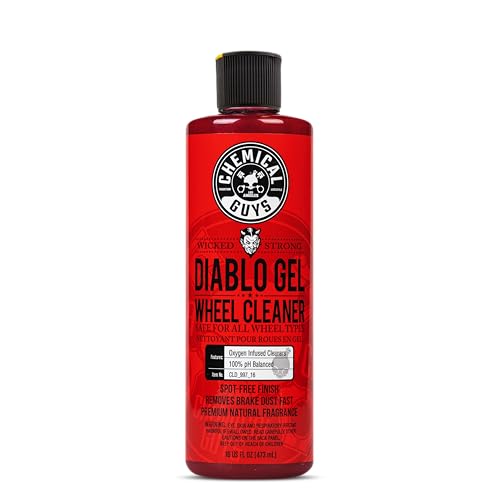
Chemical Guys Diablo Gel Wheel Cleaner
Chemical Guys Diablo Gel Wheel Cleaner
Best for: Weekly washers who want a concentrate that stretches across many washes.
Chemical Guys Diablo Gel suits drivers who wash wheels every week and want one bottle to last. It is a pH-balanced, oxygen-infused foam gel that is listed as safe on all wheel and rim finishes, and the concentrated formula means a single 16 oz bottle covers many washes once diluted to the strength the maker directs. The gel clings to the wheel instead of running off, which gives it the dwell time a thin spray lacks. It is a gentle formula by design, so it is best for regular maintenance rather than for dust that has baked on for months.
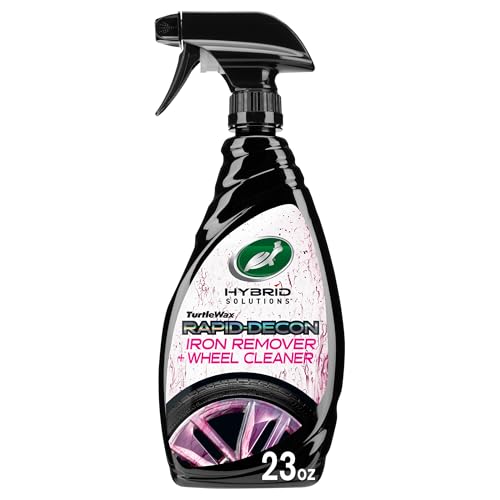
Turtle Wax Hybrid Solutions All Wheel Cleaner & Iron Remover
Turtle Wax Hybrid Solutions All Wheel Cleaner & Iron Remover
Best for: Drivers who want one bottle for wheels and painted surfaces.
Size: 23 oz bottle
Model: 53759
Formula: acid-free, low odor
Color change: clear to purple on iron contamination
Turtle Wax Hybrid Solutions is the most versatile bottle here because it is listed for wheels and painted surfaces alike. The clear liquid turns purple on contact with iron contamination, so brake dust and embedded iron show up as the cleaner works, and the acid-free formula is listed for wheels, clear coat, polished metal, chrome, and glass. That makes it useful beyond the wheels: the same bottle can decontaminate paintwork before a wash. The low-odor formula is a welcome change from sharper iron removers, and the 23 oz bottle is sized for regular use on one or two cars.
Which One Fits Your Situation
You wash a daily driver once a week
Pick the Meguiar’s Ultimate All Wheel Cleaner. Its gel clings long enough for a quick spray-and-rinse with no heavy scrubbing, and the acid-free formula is safe on whatever finish your daily driver carries. The 24 oz bottle is a practical size for four wheels a week, and the purple color change tells you when the brake dust has dissolved.
Your wheels are black, matte, or powder-coated
Pick the SONAX Full Effect or the Chemical Guys Diablo Gel. Both are pH-balanced formulas listed for sensitive finishes, and neither relies on a harsh alkaline bite. The SONAX gives you a visible red or purple reaction to confirm the dust is gone, while the Diablo Gel is the cheaper route when you wash often and want a concentrate.
Brake dust has baked on for months
Pick the SONAX Full Effect first, with the Turtle Wax Hybrid Solutions as the backup. Iron-reactive formulas dissolve the embedded particles that plain degreasers leave behind, and the color change shows where the dust is thickest. Let the cleaner dwell the full time the maker directs, rinse, and repeat the pass rather than switching to a stronger acid cleaner.
You want one bottle for wheels and paint
Pick the Turtle Wax Hybrid Solutions All Wheel Cleaner & Iron Remover. It is the only bottle here listed for painted surfaces as well as wheels, so it can decontaminate paintwork in the same session. The clear-to-purple reaction shows iron contamination on both surfaces, and the low-odor formula is easier to use in a closed garage.
Common Mistakes
Spraying cleaner on hot wheels straight after driving, which dries the product onto the finish before it can work.
Using a high-alkaline cleaner on polished aluminum, anodized, or powder-coated wheels and dulling the finish.
Rinsing too early, before the color change has finished, and leaving dissolved brake dust on the wheel.
Skipping the barrel of the wheel and the lug nuts, where brake dust collects out of sight.
Ordering the wrong size of a familiar formula, since the same cleaner often has several listings at different volumes.
Frequently Asked Questions
Can I use a spray-and-rinse wheel cleaner on any wheel finish?
Not every formula suits every finish. Acid-free, pH-balanced cleaners are listed for most factory finishes, including chrome, aluminum, steel, clear coat, and powder coat. High-alkaline cleaners are stronger on grease but can dull polished aluminum and anodized surfaces. Check the listing for the finishes it names, and test a small hidden spot first when the finish is uncoated or aftermarket.
How long should I leave the cleaner on the wheel?
Most spray-and-rinse formulas need two to five minutes of dwell time on a cool wheel, out of direct sun. Gels and foams cling longer than thin sprays, which helps on vertical surfaces. Rinse thoroughly once the color change has finished, and repeat the pass on stubborn dust instead of letting the cleaner dry on the wheel.
Do iron-reactive cleaners damage brake parts?
Iron-reactive cleaners are made to dissolve iron brake dust, and the formulas in this guide are listed as safe for painted brake components. They should still be rinsed fully from calipers and discs, and they are not a substitute for brake service. Never spray any cleaner on a hot brake disc, and keep the product off rubber seals longer than the maker directs.
Why does my wheel cleaner change color?
The color change is the cleaner reacting with iron in brake dust. Formulas with iron-reactive chemistry turn red or purple where they meet ferrous particles, which shows where the dust is thickest and when the reaction is done. A plain degreaser does not change color, so it gives no visual signal, and you judge it by the dirt that rinses away instead.
S
Softlavender Editorial Team
We compare specs, materials and verified owner reviews before a product earns a spot. Rankings are never paid.
Affiliate disclosure. As an Amazon Associate we earn from qualifying purchases at no extra cost to you. Prices accurate as of the date shown.
Find the best rechargeable RV van conversion batteries for your build. Compare LiFePO4 house batteries on capacity, size, cold-weather charging and warranty.
Get the best PSP battery life with proven settings, smart charging habits and replacement-battery checks that help your PlayStation Portable last longer.
Find the best lithium starting battery for your motorcycle, ATV, or boat. Compare LiFePO4 cranking power, group size, CCA, and BMS protection before you buy.
Find the best double pole thermostat for a 240V baseboard heater. Compare five double-pole line-voltage thermostats by voltage, amps, wiring, and controls.
Find the best battery powered commercial lawn equipment for pro crews: mowers, blowers, trimmers, chainsaws and hedge trimmers compared on power and runtime.
Find the best truck bed extenders for ladders, kayaks, lumber and long cargo. Compare hitch-mount and tailgate models, capacities and fit before you buy.


 Chemical Guys Diablo Gel Wheel Cleaner
 Turtle Wax Hybrid Solutions All Wheel Cleaner & Iron Remover