We independently review everything we recommend. When you buy through our links, we may earn a commission. As an Amazon Associate we earn from qualifying purchases.
Best Desktop CNC Routers for Furniture Makers
Find the best desktop CNC routers for furniture makers, with work areas, spindle power and honest limits for cabinet parts, inlays, signs and joinery.
Find the best desktop CNC routers for furniture makers, with work areas, spindle power and honest limits for cabinet parts, inlays, signs and joinery.
Introduction
The best desktop cnc routers for furniture makers are the machines that fit on a workbench yet cut real furniture parts: drawer fronts, cabinet door panels, inlays, chair components, joinery templates and carved signs. A desktop CNC router will not replace a full-size shop machine, and no benchtop bed in this guide is wide enough for a complete dining table top or a full wardrobe side in a single pass. What these machines do well is repeatable, precise work on parts that fit their beds, and that is where they earn their place in a small furniture workshop.
OUR TOP PICK
Genmitsu 4040-PRO MAX CNC Router Machine with 710W Spindle
Quick answer: if you want the strongest all-round pick for furniture parts, start with the Genmitsu 4040-PRO MAX, because its 710W trim router and 410 x 405 x 77 mm work area handle hardwoods and thicker stock better than the lighter machines in this guide. If your budget is tighter and you mainly cut signs, inlays and small panels, the Genmitsu 4040-PRO is the balanced middle choice. For the largest bed in this guide, the Twotrees TTC450 Pro gives you a 460 x 460 x 80 mm work area.
Before you buy, measure your bench, decide which furniture parts you will cut most often, and check the work area against those parts. A machine that is too small forces you to tile every job into sections, and a spindle that is too weak forces shallow passes in oak, maple and walnut.
Quick Picks
Our Short List of 3
Editor’s Choice
1. Genmitsu 4040-PRO MAX CNC Router Machine with 710W Spindle
Work area decides which furniture parts you can cut without tiling. A 400 x 400 mm bed fits drawer fronts, cabinet door inserts, small table aprons, chair seat templates and carved plaques. It does not fit a full cabinet side or a wide headboard panel in one pass. The Twotrees TTC450 Pro, with its 460 x 460 mm bed, gives you the most room in this guide, and that extra width matters when you cut repeated parts for a set of chairs or a run of cabinet doors. If you plan to cut parts longer than the bed, look for a machine with an available Y-axis extension kit, such as the Genmitsu 4040-PRO. Always measure the usable cutting area, not the outside dimensions of the machine, because clamps and the spindle mount eat into the edges of the bed.
Spindle Power Sets Your Cutting Depth
Spindle power is the difference between a machine that carves signs and a machine that cuts furniture parts in hardwood. The 710W trim router on the Genmitsu 4040-PRO MAX spins up to 30,000 RPM and takes deeper passes in oak, maple and walnut than the lighter DC spindles in this guide. The 75W spindle on the Genmitsu 4040-PRO and the 80W spindle on the Twotrees TTC450 Pro are workable for engraving, inlays and shallow profile cuts, but they need light passes and sharp bits in dense hardwoods. The FoxAlien Masuter Pro ships with a 775 spindle motor and includes both 52 mm and 65 mm clamps, so fitting a more powerful trim router later is a clamp swap rather than a rebuild. If most of your work is hardwood thicker than 18 mm, put spindle power at the top of your list.
Frame Rigidity and Drive System
A rigid frame keeps edges clean and joinery accurate. Look for lead screw drive on all three axes rather than belts, because lead screws resist backlash and hold position during long cuts. The Genmitsu 4040-PRO uses dual 16 mm HSS steel tubes on each axis with lead screw drive, and the 4040-PRO MAX moves to linear rails on the X axis with lead screw drive. The Twotrees TTC450 Pro uses an aluminum alloy and stainless steel frame with NEMA 57 stepper motors, which gives it a solid feel for a machine of its size. A heavier machine vibrates less, so weight is a useful rough guide to rigidity. Check that the spoilboard is supported across its span, because a sagging bed shows up as uneven depth in wide carvings.
Z Travel and Pass Height
Z travel limits how thick your stock can be and how deep your relief carving can go. The Genmitsu 4040-PRO offers 80 mm of Z travel, the Twotrees TTC450 Pro offers 80 mm, and the 4040-PRO MAX offers 77 mm of Z travel with a taller pass height for thicker workpieces under the gantry. The FoxAlien Masuter Pro offers 60 mm of Z travel, which is the shallowest in this guide and the first limit you will meet when carving deep reliefs or cutting thick chair parts. If you cut raised panels, sculpted chair backs or thick live-edge slabs, Z travel matters as much as bed size.
Control, Software and Safety
Every machine in this guide runs GRBL control, which works with common CAD and CAM programs such as Easel, Carveco Maker, Fusion 360 and Candle, so you are not locked into one maker’s software. That matters for furniture makers, because you will design parts in one program and generate toolpaths in another, and GRBL keeps that workflow open. Limit switches, an emergency stop button and a Z-probe are worth having from day one: limit switches stop the carriage from over-travel, the emergency stop halts a bad cut immediately, and the Z-probe sets tool height accurately. The Twotrees TTC450 Pro adds a 3.5-inch IPS capacitive touchscreen, so you can jog, home and start a job without a laptop tethered to the bench. Remember that CAD and CAM software is usually a separate purchase or subscription, and none of these machines includes a full furniture design library.
Dust, Noise and Workshop Fit
CNC routers make dust and noise, and furniture woods such as MDF and walnut produce fine dust that needs extraction. Plan for a dust shoe or a shop vacuum connection, and check whether the machine you choose has an available dust shoe accessory: the Genmitsu 4040-PRO MAX supports one, and the FoxAlien Masuter Pro has a well-stocked accessory range. Measure your bench before ordering, because a 400 mm bed machine needs considerably more bench space than its bed size once you add the control box, the cable chain and room to load stock from the front. If your workshop shares space with a living area, the quieter 32-bit drivers on the Genmitsu machines are a real advantage over older, noisier driver boards.
The Best Desktop CNC Routers for Furniture Makers Reviewed
1. Genmitsu 4040-PRO MAX CNC Router Machine with 710W Spindle
Top Pick
1. Genmitsu 4040-PRO MAX CNC Router Machine with 710W Spindle
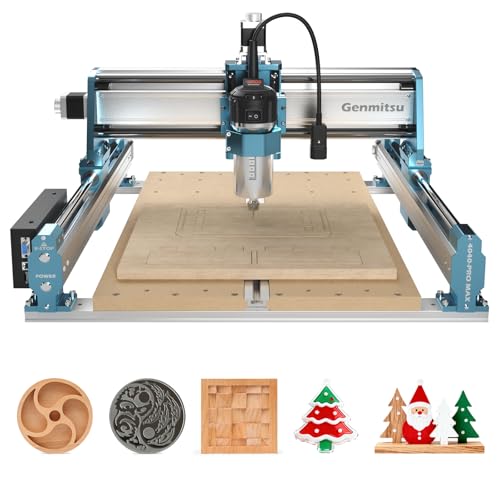
The Genmitsu 4040-PRO MAX is the strongest pick in this guide for furniture makers who cut hardwoods regularly. Its work area measures 410 x 405 x 77 mm, and its 710W digital display trim router spins up to 30,000 RPM, which gives it noticeably more cutting headroom than the lighter DC spindles on the other machines here. That power shows up in deeper passes in oak and maple, cleaner edges on profile cuts, and less time spent on thick stock. The X axis runs on SBR16 linear rails with lead screw drive, and the reinforced spoilboard has an integrated T-track with a central aluminum support bar, so clamping furniture parts is flexible and the bed resists sagging under load.
The control board supports wireless control with an optional Wi-Fi module, and the machine is compatible with a Y-axis extension kit, a 4th-axis rotary module and a dust shoe.
Partial fit to note: the bed is still far too small for full furniture panels, so cabinet sides and table tops need tiling or cutting in sections. The 77 mm Z travel also limits very thick stock and deep relief work, and the trim router is louder than a DC spindle, so dust extraction and hearing protection belong in your setup from the start.
Key specifications: Work area 410 x 405 x 77 mm; spindle 710W trim router, up to 30,000 RPM; drive SBR16 linear rails on X axis, lead screw; control GRBL with wireless support; accessories Y-axis extension, 4th-axis rotary module and dust shoe supported.
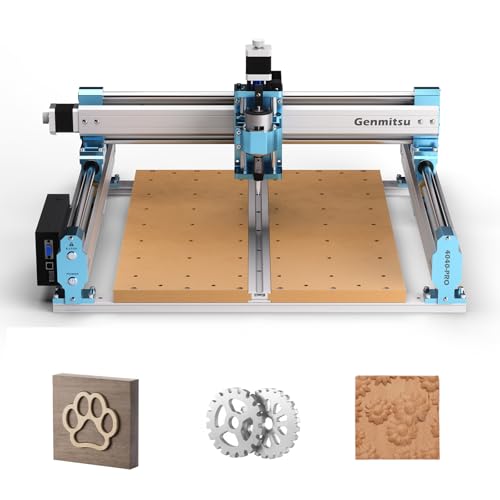
The Genmitsu 4040-PRO is the balanced middle choice in this guide, and the one most furniture makers should compare every other machine against. Its work area measures 435 x 400 x 80 mm, the widest X travel of the 4040-class machines here, and it uses dual 16 mm HSS steel tubes on each axis with lead screw drive on all three axes. That combination keeps the gantry stable during long cuts and reduces chatter on hardwood edges. The 32-bit GRBL controller uses silent Toshiba drivers, which keeps stepper noise down in a home workshop, and the machine ships with limit switches, an emergency stop button and a Z-probe.
Partial fit to note: the stock spindle is the weak point for furniture work in dense hardwoods, where you will need light passes and patience, or a spindle upgrade. The 80 mm Z travel also limits thick stock. Treat this as a precise, rigid engraving and light milling machine that can grow, not as a heavy cutting machine out of the box.
Key specifications: Work area 435 x 400 x 80 mm; spindle 75W DC spindle, up to 9,000 RPM; drive dual 16 mm HSS steel tubes, lead screw on all axes; control 32-bit GRBL with silent drivers; safety limit switches, emergency stop and Z-probe included.
The FoxAlien Masuter Pro is the upgrade-friendly pick in this guide. Its work area measures 400 x 400 x 60 mm, and its all-metal structure with a linear rail Z axis gives it a solid, planted feel on the bench. The 775 spindle motor runs up to 10,000 RPM, and the machine ships with both 52 mm and 65 mm spindle clamps, which is the detail that matters most for furniture makers: fitting a 65 mm trim router later is a straightforward swap, and the machine also supports a 1.5 kW spindle for buyers who eventually want serious cutting power. It runs GRBL 1.1H control and works with common CAD and CAM programs, and its accessory range includes extension kits that lengthen the bed for longer parts.
For furniture work, the Masuter Pro is well suited to signs, carved plaques, inlay work, drawer fronts and small panels in wood, acrylic, MDF and nylon. Assembly takes longer than the pre-assembled Genmitsu machines, so allow a full session for setup and squaring the frame before your first cut.
Partial fit to note: the 60 mm Z travel is the shallowest in this guide, so deep relief carving and thick chair parts will hit the ceiling quickly. The stock 775 spindle is also modest for hardwood, so budget for the trim router upgrade if hardwood cutting is your main work rather than an occasional job.
Key specifications: Work area 400 x 400 x 60 mm; spindle 775 motor, up to 10,000 RPM; clamps 52 mm and 65 mm included; frame all-metal with linear rail Z axis; control GRBL 1.1H; upgrades trim router and 1.5 kW spindle supported.
The Twotrees TTC450 Pro has the largest work area in this guide, at 460 x 460 x 80 mm, and that extra bed space is its main reason to be here. A 460 mm square bed fits wider sign blanks, larger cabinet door panels and batches of small parts laid out side by side, which cuts down on repositioning and tiling. The frame is aluminum alloy and stainless steel, driven by NEMA 57 stepper motors, with dual limit switches on all three axes.
The standout feature is the 3.5-inch IPS capacitive touchscreen on the control box, which lets you jog, home and run a job without a laptop on the bench. The control box also carries a 4th-axis rotation port, a laser module port and a 500W spindle speed control port, so the machine has a clear upgrade path. It runs open-source GRBL control and works with ArtCam, Fusion 360, Easel and Carveco Maker across Windows, macOS and Linux. Ten cutting tools, six clamping plates and test material are included, so you can start cutting on day one.
Partial fit to note: the included spindle is an 80W brushed 775 motor, modest beside the 710W trim router on the 4040-PRO MAX, so deep cuts in hardwood will be slow. Assembly and driver installation also take extra time, including a separate driver step for some Windows setups.
Key specifications: Work area 460 x 460 x 80 mm; spindle 80W, 775 brushed motor; display 3.5-inch IPS capacitive touchscreen; motors NEMA 57 steppers; control open-source GRBL; included 10 cutting tools, 6 clamping plates and test material.
Check the work area against your most common furniture part before you order, and remember that clamps reduce the usable area at the edges. Confirm the spindle mounts and the spindle power, because a machine with a 65 mm clamp and a trim router option will serve a furniture workshop far longer than one locked to a small DC spindle. Verify that the machine runs GRBL or another open control system that works with the CAD and CAM software you already use, and check whether limit switches, an emergency stop and a Z-probe are included or sold separately.
Read the assembly instructions before the box arrives, and count on a full session for machines that ship as a kit rather than pre-assembled modules. Plan dust extraction from the start, because MDF and hardwood dust builds up fast and a dust shoe keeps both the cut and your lungs cleaner. Check the weight and the bench space the machine needs, including the control box and cable chain. Finally, confirm the return and support terms on the Amazon listing itself, and check that bits, clamps, spoilboards and extension kits for your exact model are available, because a machine with no accessory range is a dead end once your projects grow.
FAQ
Can a desktop CNC router cut real furniture parts?
Yes, within its bed size. A desktop CNC router cuts drawer fronts, cabinet door panels, inlays, templates, chair components and carved signs accurately and repeatedly. It cannot cut a full table top or a complete cabinet side in one pass, so large parts need tiling, sectioning or a larger machine.
What work area do furniture makers need?
A 400 x 400 mm bed covers most small furniture parts, signs and inlays. A 460 x 460 mm bed, such as the Twotrees TTC450 Pro, adds useful room for wider panels and batch work. If you regularly cut parts longer than 400 mm, look for a machine with a Y-axis extension kit, and measure the usable cutting area rather than the outside dimensions of the machine.
Do I need CAD and CAM software?
Yes. A CNC router needs a design file and a toolpath file, and none of the machines in this guide includes a full furniture design library. The GRBL control on all four machines works with common programs such as Easel, Carveco Maker, Fusion 360 and Candle. Budget time to learn the software, because design and toolpath setup take longer than the cutting itself on most furniture jobs.
Is assembly difficult for a first-time buyer?
It varies. The Genmitsu 4040-PRO uses pre-assembled modules and is the quickest to set up in this guide. The FoxAlien Masuter Pro and the Twotrees TTC450 Pro need more assembly time, and the Twotrees needs driver installation before the first computer connection. Allow a full session and square the frame carefully.
Bottom Line
The best desktop cnc routers for furniture makers balance bed size, spindle power and frame rigidity against the parts you actually cut. For hardwood furniture parts and thicker stock, the Genmitsu 4040-PRO MAX leads this guide with its 710W trim router and linear rail motion. For balanced all-round work, the Genmitsu 4040-PRO offers a rigid lead screw frame and a generous 435 mm X travel. For buyers planning a trim router upgrade, the FoxAlien Masuter Pro has the clamps and the frame to grow into. For the largest bed and the most room for panels and batch parts, the Twotrees TTC450 Pro is the pick. Whichever machine you choose, measure your parts against its work area first, plan for dust extraction, and start with light passes in hardwood until you know how the machine behaves.
Disclosure: As an Amazon Associate, we may earn from qualifying purchases.
S
Softlavender Editorial Team
We compare specs, materials and verified owner reviews before a product earns a spot. Rankings are never paid.
Affiliate disclosure. As an Amazon Associate we earn from qualifying purchases at no extra cost to you. Prices accurate as of the date shown.
Find the best bike for youth with our guide to sizing, brakes, gears and frame fit for older children and teens, plus four youth bikes to consider first.
Looking for the best bike for overweight riders? Compare heavy-duty fat tire bikes, cruisers and tricycles with high weight limits for a comfortable ride.
Discover the best bike brands UK riders trust, from Brompton folding bikes to Pashley classics. Compare heritage, styles and standout models before you buy.
Looking for the best bike brand for kids 2? Compare Woom, Strider, RoyalBaby, JOYSTAR and Schwinn on sizing, safety, weight and value for young riders.
Looking for the best battery powered kettle? This guide covers true rechargeable kettles, boil times, capacity, safety features and what to check first.
Find the best touring bike pedals for loaded rides: dual-sided SPD, flat platform and clipless picks with platform size, axle standard and weight compared.
Find the best MTN bike grips for trail riding, with lock-on fit, diameter, length and compound explained so you can choose comfortable, secure grips today.
Looking for the best bike for city biking? Compare hybrid and comfort city bikes for commuting and errands, with fit, gear and brake guidance to choose well.
Looking for the best 250 MX bike on Amazon? Read this first: no true 250cc MX bike is sold there. See the two verifiable 223cc picks and the dealer benchmarks.
Bambu P3C vs Snapmaker U1 compared on build volume, speed, multi-material printing, materials, software and ease of use to help you pick the right printer.

 3. FoxAlien Masuter Pro CNC Router Machine
 4. Twotrees TTC450 Pro CNC Router Machine