We independently review everything we recommend. When you buy through our links, we may earn a commission. As an Amazon Associate we earn from qualifying purchases.
best bike for youth: A Parent’s Guide to Sizing, Safety and Fit
Find the best bike for youth with our guide to sizing, brakes, gears and frame fit for older children and teens, plus four youth bikes to consider first.
Find the best bike for youth with our guide to sizing, brakes, gears and frame fit for older children and teens, plus four youth bikes to consider first.
Choosing the best bike for youth is less about finding one perfect model and more about matching a real rider to a real bike. Youth covers a wide range, from a seven-year-old who has just outgrown a first pedal bike to a teenager who wants to ride to school, explore trails, or practise BMX skills at a local park. Those riders differ in height, leg length, arm reach, and confidence, so a bike that delights one child can feel heavy or hard to control for another.
The quick answer is to start with size, then riding style, then brakes and gears. For most riders in this age group, a 20-inch wheel bike suits ages around seven to ten, while a 24-inch wheel bike suits taller pre-teens and younger teenagers. Measure inseam and rider height rather than relying on age alone, check that the rider can stand over the frame with both feet near the ground, and choose hand brakes once a rider is ready to move beyond a coaster brake. A lighter frame, an adjustable seat, and a simple gear setup usually matter more than extra features.
Below are four youth bikes for different needs: an everyday model, a BMX option, a relaxed cruiser, and a retro-styled bike. Each is a complete youth bike listed on Amazon US, with its ASIN shown.
Age labels on bike listings are a starting point, not a measurement. Two nine-year-olds can differ by several inches in height and leg length, and that difference decides whether a bike feels stable or awkward. Measure height standing barefoot against a wall, then measure inseam from the floor to the inside of the leg. Compare both numbers with the sizing guidance on the product page.
Standover height matters most. The rider should stand over the top tube with both feet flat or nearly flat on the ground. If the frame is too tall, stopping becomes stressful; if it is too small, knees rise too high. A slightly small bike is usually easier to manage than a slightly large one. With the seat set correctly, the leg should have a slight bend at the bottom of the pedal stroke, and a tool-free adjustable seat post helps as the rider grows.
Match the Wheel Size to the Rider
Wheel size is the main size language for youth bikes. A 20-inch wheel is the common step after a 16-inch first bike and suits many riders from around seven to ten years old, depending on height. A 24-inch wheel suits taller pre-teens and younger teenagers who have outgrown a 20-inch bike but are not yet ready for a full adult frame. A 26-inch wheel can suit taller teenagers, but it often brings an adult-sized frame, longer reach, and heavier handling, so it needs a careful fit check.
Do not choose a larger wheel simply to give a child room to grow into it. A bike that is too large is harder to start, stop, and steer. If you are between sizes, the smaller size usually gives better control. Pavement and school routes favour smooth tyres and an upright position, packed dirt favours wider tyres with more tread, and a BMX park favours a compact frame and a single gear. Pick the style that matches the riding your child already does.
Choose the Frame and Weight
Frame material and weight affect how a youth bike feels more than almost any other feature. A heavy bike is harder to lift over a kerb, harder to push up a slope, and harder to catch if it tips. A lighter bike is easier to steer, easier to start from a stop, and less tiring on a longer ride. Steel frames are durable and often lower in cost, while aluminium frames are often lighter for the same size. Both can work well when the rest of the bike is well made.
Check frame shape as well as material. A low step-over frame makes mounting easier, and youth-specific geometry, designed around shorter arms and a shorter torso, usually feels more natural than a scaled-down adult frame. The fork should feel straight and solid, the wheels should spin without wobble, and the handlebar should turn smoothly. A chain guard helps keep clothing away from the chain, and a kickstand helps a rider park the bike without laying it down.
Understand Brakes Before You Buy
Brakes are a safety feature first and a learning feature second. A coaster brake, operated by pedalling backwards, is simple and familiar for younger riders moving up from a first bike. It works well for flat, slow riding and needs little hand strength. Its limit is that it only brakes the rear wheel, and it can be harder to use precisely on a slope or at higher speed.
Hand brakes give more control, letting a rider slow gradually with both wheels, which matters on hills and loose surfaces. A bike that combines a coaster brake with hand brakes can be a useful bridge while the rider builds hand strength. Check lever reach if you can: levers made for adult hands can sit too far from the grip for a smaller hand. Whatever brake type you choose, test it at walking speed in a quiet area before the first real ride.
Decide How Many Gears Are Needed
Gears help on hills and on longer rides, but they also add complexity. A single-speed bike is simple, light, and easy to maintain. It suits flat neighbourhoods, school routes, and BMX riding, where the rider wants direct pedalling without shifting. There is no shifter to learn, no derailleur to knock out of adjustment, and fewer parts to service.
A multi-gear bike suits a rider who faces hills, rides longer distances, or rides on mixed terrain. For a youth rider, a small number of gears is often enough, with a grip shifter or simple trigger shifter. A child still building confidence may find shifting distracting, while a teenager riding to school over a hill may find gears essential. If you choose a geared bike, practise shifting on flat ground first, then on a gentle slope.
Check Comfort, Fit, and Adjustability
Comfort decides whether a bike gets ridden every week or left in the garage. The saddle should be wide enough to support the rider without pressure, and the grips should fit smaller hands without feeling bulky. Handlebar width should match shoulder width, and the riding position should be upright enough that the rider can see ahead easily and look over a shoulder without losing balance.
Adjustability extends the useful life of a youth bike. An adjustable seat post is the most important adjustment, followed by handlebar height and angle. Make each adjustment in small steps, then let the rider try the bike. Sore knees often mean the seat is too low, aching shoulders often mean the handlebar is too far away, and numb hands often mean the grips are too large. Tyres should be pumped to the pressure on the sidewall, the chain should be clean and lightly lubricated, and the bolts should be tight. A short check before the first ride, and a quick check each month, keeps a youth bike safe and predictable.
The Schwinn Firehawk is a strong starting point for everyday youth riding. It is a 20-inch bike aimed at riders aged seven to thirteen, with a SmartStart design that places the pedals, seat, and handlebar in positions suited to a younger rider rather than simply shrinking an adult frame. That design focus shows in the riding position, which is upright and approachable for a rider who is still building confidence.
The Firehawk combines a rear coaster brake with front and rear hand brakes, a useful bridge for a rider learning hand brakes. The tool-free adjustable seat lets the bike grow with the rider, and a front suspension fork helps smooth out bumps on pavements and packed paths. It is built for regular neighbourhood and school use rather than aggressive trail riding or BMX tricks, and its single-speed setup keeps maintenance straightforward.
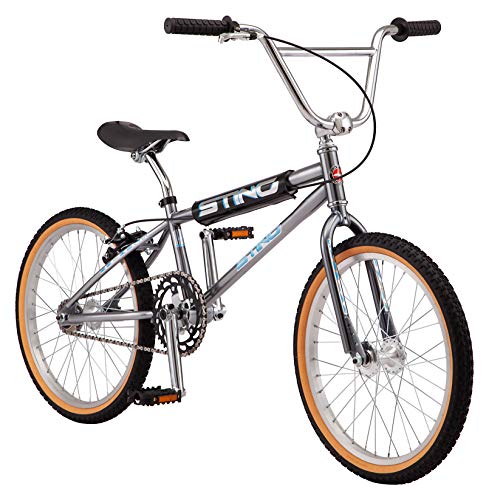
The Schwinn Sting Pro BMX is the pick in this guide for older youth who want a BMX bike rather than a general-purpose bike. It is a single-speed BMX with a Hi-Ten steel frame based on a retro design, available with 20-inch or 24-inch wheels. The 20-inch version suits riders from around 48 to 54 inches tall, which places it in the older youth range rather than the youngest riders in this guide.
This is a purpose-built bike. The compact frame, single gear, and caliper brakes suit BMX parks, pump tracks, and smooth dirt, where direct pedalling and quick handling matter more than gears or suspension. It is lighter than many general youth bikes of the same wheel size, which helps with turning and carrying it. It is not the right choice as a general school or trail bike: there are no gears for hills, no suspension for rough ground, and no extras for everyday use. Check the rider weight guidance on the listing for the size you are considering.
The Firmstrong Urban Girl is a relaxed single-speed cruiser for younger riders in the youth range. It has 20-inch wheels and is listed for ages seven to nine, which places it at the younger end of this guide. The classic cruiser design, with a curved frame, a wide dual-spring saddle, and whitewall tyres, suits slow neighbourhood rides, park paths, and school-yard riding rather than hills or trails.
The single-speed setup keeps things simple: no shifter to learn, and a pedal-backward coaster brake familiar to riders moving up from a first bike. That suits a rider still building confidence on flat ground, and the upright position and cushioned saddle help on short rides. This is a partial fit for older youth: the age range tops out at nine, the single gear makes hills hard work, and the coaster brake alone gives less control on slopes than a hand-brake setup. Treat it as a first youth cruiser for a younger rider, not as a bike for a twelve-year-old or for mixed terrain.
The Schwinn Classic Krate is the most distinctive bike in this guide. It is a 20-inch bike for riders aged six and over, with a Sting-Ray style frame, a springer fork, a high-rise ape handlebar, and a banana seat. The Lemon Peeler version is the best-known colour option, and the overall look is a deliberate throwback to classic cruiser styling. For a rider who cares about how a bike looks as much as how it rides, that style is a real draw.
Under the styling, it is a single-speed cruiser with a 13-inch frame and a minimum rider height of around 48 inches, in the same casual-riding category as the Firmstrong cruiser above. It suits flat neighbourhood rides and slow park loops. This is also a partial fit: the banana seat and high handlebar prioritise looks over long-distance comfort, the single gear limits hill riding, and the 20-inch size will be outgrown by taller teenagers. Buy it for a younger rider who loves the retro look and rides mainly on flat ground.
Before you order, work through a short checklist that catches the most common mistakes. First, confirm the exact size and wheel option on the listing you are buying. Many youth bikes are sold in several wheel sizes and colours under one listing, and the ASIN can change with the option selected. Check the wheel size, frame size, and age guidance for the specific option in your basket, not just the headline title.
Second, confirm what is included and what needs assembly. Most youth bikes arrive partly assembled, with the handlebar, pedals, front wheel, and seat to fit. Check whether tools are included and how long the assembly is likely to take. A bike that is assembled badly is unsafe, so take your time, follow the instructions in order, and check every bolt before the first ride.
Third, check the return and warranty terms. Youth bikes are bulky to return, so read the return window and keep the packaging until the bike has been assembled and test-ridden. Note the frame warranty and the parts warranty separately. Fourth, plan the first ride in a quiet, flat area away from traffic, check the brakes at walking speed, and adjust the seat once the rider has tried the bike. A helmet that fits properly is essential.
Finally, re-check the fit after a few weeks. A quick monthly check of seat height, tyre pressure, brake function, and chain condition keeps the bike safe and comfortable. If the rider reports sore knees, numb hands, or difficulty reaching the brakes, adjust the fit before the next ride.
FAQ
What size bike does a youth rider need?
Start with rider height and inseam, not age alone. A 20-inch wheel suits many riders from around seven to ten, while a 24-inch wheel suits taller pre-teens and younger teenagers. The rider should stand over the frame with both feet near the ground and pedal with a slight bend in the leg. If you are between sizes, the smaller size usually gives better control.
Is a 20-inch bike too small for a teenager?
For many teenagers, yes. A taller teenager will usually feel cramped on a 20-inch bike, with knees rising too high. A 24-inch wheel is the usual next step, and some taller teenagers will need a 26-inch wheel or a small adult frame. Measure height and inseam before deciding.
Are gears necessary on a youth bike?
Gears are helpful on hills and longer rides, but they are not essential for every rider. A single-speed bike is simpler, lighter, and easier to maintain, and it suits flat neighbourhoods, school routes, and BMX riding. A geared bike suits a rider who faces hills regularly or rides longer distances. For a youth rider, a small number of gears with a simple shifter is often enough, and the rider should practise shifting on flat ground first.
What brakes are best for a youth bike?
A coaster brake is simple and familiar for younger riders, while hand brakes give more control on hills and at higher speed. A bike that combines both, such as the Schwinn Firehawk in this guide, lets a rider use the familiar coaster brake while learning hand brakes. Whatever type you choose, check lever reach for smaller hands, and test the brakes at walking speed in a quiet area before the first real ride.
How do I know if a youth bike is good quality?
Look for a frame that feels solid, wheels that spin without wobble, brakes that stop smoothly, and a chain that runs cleanly. Youth-specific geometry, an adjustable seat, and levers sized for smaller hands are good signs. Check the assembly instructions, spare parts, and the return and warranty policy. A short test ride in a quiet area will reveal most fit problems quickly.
Bottom Line
The best bike for youth is the one that fits the rider in front of you, suits the riding they actually do, and feels safe and comfortable enough to ride often. Start with height and inseam, choose the wheel size that gives control, and pick brakes and gears that match the terrain and the rider’s confidence. For most families, the Schwinn Firehawk is the safest first choice, the Schwinn Sting Pro suits an older rider who wants BMX, and the Firmstrong Urban Girl or Schwinn Classic Krate suits a younger rider on flat ground who values comfort or style.
Measure twice, assemble carefully, test the brakes before the first real ride, and re-check the fit as your rider grows. A bike chosen that way is far more likely to be ridden, enjoyed, and outgrown for the right reason: your rider got taller, stronger, and ready for the next size up.
Disclosure: As an Amazon Associate, we may earn from qualifying purchases.
S
Softlavender Editorial Team
We compare specs, materials and verified owner reviews before a product earns a spot. Rankings are never paid.
Affiliate disclosure. As an Amazon Associate we earn from qualifying purchases at no extra cost to you. Prices accurate as of the date shown.
Looking for the best bike for overweight riders? Compare heavy-duty fat tire bikes, cruisers and tricycles with high weight limits for a comfortable ride.
Discover the best bike brands UK riders trust, from Brompton folding bikes to Pashley classics. Compare heritage, styles and standout models before you buy.
Looking for the best bike brand for kids 2? Compare Woom, Strider, RoyalBaby, JOYSTAR and Schwinn on sizing, safety, weight and value for young riders.
Looking for the best battery powered kettle? This guide covers true rechargeable kettles, boil times, capacity, safety features and what to check first.
Find the best touring bike pedals for loaded rides: dual-sided SPD, flat platform and clipless picks with platform size, axle standard and weight compared.
Find the best MTN bike grips for trail riding, with lock-on fit, diameter, length and compound explained so you can choose comfortable, secure grips today.
Looking for the best bike for city biking? Compare hybrid and comfort city bikes for commuting and errands, with fit, gear and brake guidance to choose well.
Looking for the best 250 MX bike on Amazon? Read this first: no true 250cc MX bike is sold there. See the two verifiable 223cc picks and the dealer benchmarks.
Bambu P3C vs Snapmaker U1 compared on build volume, speed, multi-material printing, materials, software and ease of use to help you pick the right printer.


 Schwinn Classic Krate