Key takeaways
- Compare woodworking CNC routers for prototype workshops by work area, drive system and spindle, from compact all-metal frames to ball-screw machines.
A prototype workshop lives or dies on iteration speed, and that is the real decision behind this purchase. You are not buying a machine to carve one sign; you are buying the ability to cut a plywood bracket in the morning, find the fit is wrong, adjust the file, and cut a corrected version before lunch. Work area, drive stiffness and spindle type decide how many of those cycles end in a usable part instead of a snapped bit or a shifted workpiece.
This guide is for prototype shops, product developers and small fabrication teams choosing a benchtop CNC router mainly for wood, MDF, plywood and acrylic work. Every machine below was selected from the name and specifications stated on its own Amazon product page, and each listing describes a CNC router for wood-type materials rather than a laser, a mill for heavy metal, or a handheld tool.
Quick Picks
As an Amazon Associate we earn from qualifying purchases.
| Product | Best for | Key spec from title |
|---|---|---|
| FoxAlien Masuter Pro | A first shared bench for varied prototype jobs | 3-Axis CNC Router Machine, All-Metal Structure |
| Genmitsu 4040-PRO | Square panels and cabinet-style parts | Working Area 15.7 x 15.7 x 3.1 inches |
| Genmitsu PROVerXL 4030 | Longer boards on a mid-size footprint | Working Area 400 x 300 x 110mm |
| FoxAlien XE-PRO | Repeat cuts where drive accuracy matters most | CNC Router Machine with Ball Screws, 400W |
How to Choose
Match the work area to your largest recurring part
Measure the part you cut most often, not the largest part you can imagine. A team prototyping enclosure panels, jigs and small furniture components usually repeats a handful of sizes, and the machine should swallow those without tiling or repositioning. The listings here range from a square 15.7 by 15.7 inch bed to a rectangular 400 by 300mm envelope, and that shape difference matters: a long, narrow board fits a rectangular bed in one setup, while a square bed suits cabinet doors and square panels. Add room around the part for clamps and tabs, because the stated area is travel, not free cutting space once workholding is in place.
Choose the drive system for the tolerance you actually need
Lead screws, belts and ball screws behave differently across hundreds of prototype cycles. A lead-screw machine such as the 4040-PRO gives steady, predictable motion for wood and acrylic at workshop speeds. Ball screws, stated on the XE-PRO listing, reduce backlash, which shows up when a prototype needs a press-fit joint or a hole pattern that must line up with a mating part cut yesterday. For loose-fit mockups in foam or MDF, either system works. For functional prototypes where two halves must register, prioritise the stiffer, lower-backlash drive and spend the saved rework time elsewhere.
Decide between a spindle and a trim router path
The spindle fitted as standard decides how the machine cuts on day one and how far it can grow. A compact DC spindle suits engraving, shallow pocketing and light profiling in wood and MDF, which covers most early-stage prototypes. Listings for these machines also describe compatibility with larger spindle mounts and upgraded spindles, so check the mount sizes stated on the page before assuming a trim router will drop in later. If your prototypes are mostly thick hardwood parts with deep pockets, plan the upgrade path now; if they are sheet goods and signage blanks, the standard spindle is the sensible starting point.
Plan workholding, dust and control before the machine arrives
A router without a workholding plan produces moving workpieces, and a prototype shop cutting MDF all week produces dust that reaches every other bench. Check what the listing says about the spoilboard, T-slot or hybrid table, and about dust shoe compatibility, then budget bench space for extraction. Control matters too: GRBL-based control, named on the 4040-PRO listing, connects to common sender software, while offline control options let a shared workshop run jobs without tying up a design computer. Decide who prepares files, who runs them, and where the machine sits before it is bolted down.
The 4 Best Options
FoxAlien Masuter Pro

This is the machine for a workshop equipping its first shared CNC bench, where several people will cut different materials across a week. The listing describes an all-metal structure, which suits a bench that gets rearranged and re-levelled as projects change, and it names wood, acrylic, MDF and nylon in its title, covering the sheet and block materials prototype work uses most. Its square-format bed handles plaques, enclosures and small panels without the footprint of a larger gantry machine, making it a practical first step before committing to a production-sized router.
Specs
- 3-Axis CNC Router Machine
- All-Metal Structure
- For Wood Acrylic MDF Nylon Routing Milling Carving
- Beginner Hobby Engraving Machine, per the listing title
Best for: A small team adding its first CNC bench for mixed wood, MDF and acrylic prototypes.
Watch out for: The listing positions it as a beginner hobby machine, so very deep hardwood cuts will need conservative passes rather than production feeds.
ASIN: B09ZTYGGTJ
Genmitsu 4040-PRO
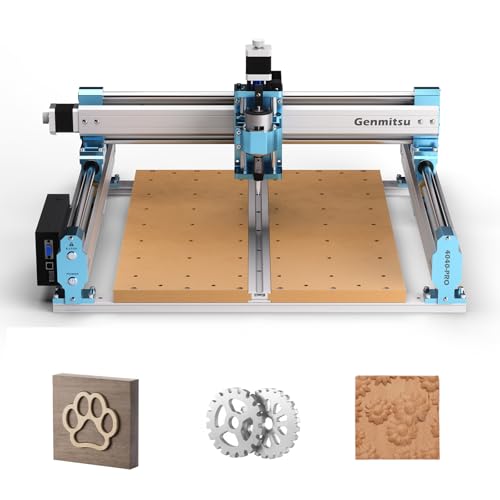
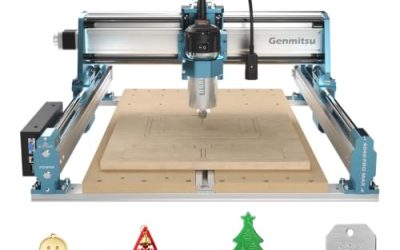
Choose this one when your prototypes are square-ish panels, cabinet parts or box components that outgrow a 3018-class bed. The listing states a 15.7 by 15.7 by 3.1 inch working area with lead screw drive and GRBL control, a combination that keeps setup familiar for anyone who has run a smaller Genmitsu or similar GRBL machine. The Amazon copy also describes a Toshiba TB6S109 driver with a 32-bit chip and multifunctional ports, plus spindle mounts supplied at 42mm and 52mm, which gives a workshop a documented route to a larger spindle later.
Specs
- Working Area 15.7 x 15.7 x 3.1 inches
- GRBL Control
- Lead Screw Driven
- 3 Axis Engraving
- Toshiba TB6S109 driver with 32-bit chip, per the listing copy
Best for: Panel, cabinet and box prototypes that need a square bed and a familiar GRBL workflow.
Watch out for: The Z travel of 3.1 inches limits thick stock, so deep carving in tall blanks is not its strength.
ASIN: B0BKSJJS34
Genmitsu PROVerXL 4030

This model suits a workshop whose parts are longer than they are wide, such as drawer fronts, instrument panels, signs and furniture components. Its listing gives a working area of 400 by 300 by 110mm, so a long board fits in a single setup while the deeper Z travel handles thicker stock than the smaller machines here. The listing title names wood and MDF among its carving materials, which matches prototype work in sheet goods, and the 4030 format is a recognised step up from the 3018 class for teams that have outgrown their first machine but cannot house a full-size gantry.
Specs
- Working Area 400 x 300 x 110mm (15.7 x 11.8 x 4.3 inches)
- CNC Router Machine for Wood Metal Acrylic MDF Carving
- 3 Axis Milling Cutting Engraving Machine
Best for: Longer boards, signs and furniture parts that need a rectangular bed and deeper Z travel.
Watch out for: The rectangular bed is narrower than the square 4040-PRO bed, so wide square panels may need repositioning.
ASIN: B08L6314MW
FoxAlien XE-PRO

Pick the XE-PRO when repeatability is the bottleneck, for example a run of identical brackets, a two-sided part that must register, or a jig that other parts locate from. Its listing leads with ball screws and a 400W spindle, and ball-screw drive is the feature that keeps hole positions and pocket dimensions consistent across repeated cuts in wood and acrylic. It is the accuracy-focused option in this group, aimed at a workshop that already knows its CAM workflow and now needs the machine to stop being the variable in whether a prototype fits.
Specs
- CNC Router Machine XE-PRO with Ball Screws
- 400W spindle, per the listing title
- 3-axis CNC router machine
Best for: Repeat runs, jigs and two-sided parts where consistent positioning matters more than bed size.
Watch out for: Several bundle variants exist under similar XE-PRO names, so confirm the exact configuration on the listing before ordering.
ASIN: B0CG9NTWVG
Which One Fits Your Situation
You are equipping a shared bench for the first time
Start with the FoxAlien Masuter Pro. A shared first bench needs a machine several people can learn on without a steep setup burden, and its all-metal structure and broad material list in the listing title cover the mix of wood, MDF, acrylic and nylon jobs a new prototype corner attracts. It leaves room for extraction, clamps and a computer, and teaches the workflow before the team commits to a more specialised machine.
Your prototypes are mostly panels, boxes and cabinet parts
Take the Genmitsu 4040-PRO. Square work fits its 15.7 by 15.7 inch area in one setup, and lead-screw drive with GRBL control keeps motion steady for sheet goods. The spindle mounts in the listing copy give a growth path, since deeper cabinet work often leads to a larger spindle. For a team cutting enclosures, drawer boxes and flat-pack furniture prototypes, this is the most direct match between bed shape and part shape in the group.
You cut long, narrow parts and thicker stock
The Genmitsu PROVerXL 4030 fits this workload. Its 400 by 300mm bed takes a long board lengthwise without tiling, and the 110mm Z travel stated in the listing accommodates thicker blanks for furniture components, moulds and carved panels. A workshop moving up from a 3018-class machine will find the workflow familiar while gaining the envelope its parts actually need. Choose it when part length, not part width, is what keeps forcing awkward setups on the current machine.
Your prototypes must fit together precisely, repeatedly
Choose the FoxAlien XE-PRO. When a prototype is a mechanism, an assembly of interlocking parts or a short run of identical components, small positioning errors compound into parts that will not fit. The ball screws in its listing address that failure mode, and the 400W spindle gives enough capacity for wood and acrylic parts. It is the pick for a workshop whose design files are already reliable and whose remaining errors come from the machine rather than the operator.
Common Mistakes
- Buying the largest bed available, then discovering the workshop has no flat, level bench space left for extraction, material storage and safe access around it.
- Judging a machine by its travel area alone and forgetting that clamps, tabs and dust shoes consume part of that envelope on every real job.
- Cutting thick hardwood at feeds suited to MDF, which dulls bits, deflects the gantry and turns a good prototype file into a poor part.
- Skipping a spoilboard and workholding plan, so the first urgent prototype is held by tape and hope instead of a repeatable clamping method.
- Assuming a spindle upgrade will fit later without checking the mount sizes the listing actually states for that model.
Frequently Asked Questions
Can these routers cut hardwood, or only soft sheet materials?
The listings name wood among the working materials for each machine, alongside MDF and acrylic, so hardwood prototyping is within their intended use. The practical limit is depth and feed: thick hardwood needs shallower passes, while plywood and MDF can be profiled more quickly. Match the material to the spindle fitted, and treat very deep hardwood work as a job for conservative settings rather than production speeds.
How much bench and clearance does a prototype workshop need?
Plan for the footprint plus working room on all sides, space to load a board onto the bed, and an extraction hose route clear of walkways. The working areas here run from about 400 by 300mm to a square 15.7 inch bed, and each machine is larger than its travel suggests. Leave room above the gantry too, because loading stock and changing tools happens from above.
Is GRBL control enough for professional prototype work?
For the jobs in this guide, yes. GRBL, named on the 4040-PRO listing, drives the machine from common sender and CAM software and handles profiling, pocketing, drilling and engraving toolpaths that prototype work consists of. Its limits appear in advanced production features rather than everyday prototyping. What matters more is a reliable connection, a tidy file-naming habit for revisions, and a routine for zeroing so repeat cuts share one reference.
What should a workshop buy alongside the router itself?
Start with workholding that suits your parts, a spoilboard, a selection of bits for profiling and pocketing in wood and MDF, and dust extraction that fits the machine. Add measuring tools for checking first articles, spare bits for deadline breakage, and eye and hearing protection for the bench. These supporting purchases decide whether the router produces prototypes from week one or waits idle while the workshop improvises around it.