Key takeaways
- Compare the best laboratory drying ovens for research laboratories, from a compact 18L benchtop gravity unit to 45L forced-air chambers reaching 300°C.
A drying oven is one of the hardest-working pieces of equipment in a research laboratory. It dries glassware between runs, cures and conditions samples, removes moisture from powders and components, and holds materials at a steady temperature for hours at a time. The difference between a good fit and a frustrating one usually comes down to three things: how evenly the chamber heats, how precisely the controller holds a set point, and whether the interior volume matches the loads a lab actually processes. An oven that runs hot in one corner or forces staff to dry samples in small batches costs time on every single working day.
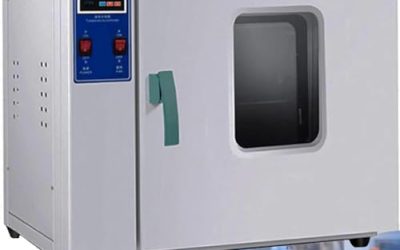
This guide compares five laboratory drying ovens sold on Amazon US, ranging from a compact 18L gravity convection benchtop unit to a 45L forced-air chamber. Four of the five use forced air convection with a fan circulating heated air, and one uses gravity convection for gentler, fan-free drying. Every model here reaches 300°C, every one runs on a digital controller, and the specifications in each section are taken from the product listings themselves. Use the Quick Picks table to narrow the field, then read the How to Choose section to work out which combination of chamber size, convection type and control features fits a research workflow.
Quick Picks
| Product | Best for | Key spec |
|---|---|---|
| stonylab Forced Air Convection Oven | General-purpose mid-size drying | 30L chamber, RT+10°C to 300°C, adjustable fan speed |
| sertheha Air Dryer Drying Oven Lab (101-0AB) | Larger batches in one run | 45L chamber, 1000W, RT+10°C to 300°C |
| Microyn Digital Bench-top Gravity Convection Drying Oven | Compact benches and gentle drying | 18L chamber, gravity convection, PID control with timer |
| Sidawhope Digital Forced Air Convection Drying Oven | Cubic chamber loads | 14 x 14 x 14 inch chamber, 1 KW, adjustable fan |
| JXUANMM Stainless Steel Digital Forced Air Convection Oven | Labs needing dual voltage | 43L chamber, 110V/220V, double air circulation |
How to Choose
Forced air versus gravity convection
Convection type is the first decision because it shapes how evenly a chamber heats. Forced air ovens use a fan to circulate heated air around the load, which evens out temperature from shelf to shelf and helps moisture leave the chamber air faster. Four of the ovens in this guide work this way, and they suit the everyday research mix of glassware drying, sample conditioning and moisture removal where uniformity matters more than delicacy. Gravity convection ovens, like the Microyn in this guide, rely on warm air rising naturally with no fan. The airflow is gentler, which suits powders and light materials that a fan could disturb, and there is no fan noise. The trade-off is slower heat-up and less even distribution across a full load, so gravity models fit smaller, less demanding batches best.
Chamber capacity and load shape
Capacity decides how much a lab can dry in one run, and the five ovens here span 18L to 45L. A compact 18L chamber handles a modest set of glassware, small sample trays and instruments, and it fits on a crowded bench. Chambers in the 30L to 45L range take multiple trays at once and suit labs drying larger glassware sets or conditioning several samples in parallel. Shape matters as well as volume: the Sidawhope uses a cubic 14 x 14 x 14 inch chamber, which accommodates taller or bulkier items that a wide, shallow chamber of similar volume might not. Match the chamber to the largest load the lab dries regularly, not the average load, and leave room around items so air can circulate between them.
Temperature range, stability and resolution
All five ovens here reach 300°C, starting from roughly ten degrees above room temperature, so the maximum is rarely the deciding factor for research drying work. What separates controllers is stability and resolution. A fluctuation figure of ±1°C, listed for the stonylab and sertheha models, describes how far the chamber temperature wanders around the set point during a run. A resolution of 0.1°C means the controller can be set and read in fine steps, which helps when a protocol calls for an exact hold temperature. Features such as temperature deviation correction and temperature calibration, listed on the Sidawhope and JXUANMM models, let staff adjust the displayed temperature against a reference thermometer so the set point reflects the real chamber conditions.
Controls, timers and safety features
Day-to-day usability comes from the controller and its supporting features. Digital displays make set points and current temperatures easy to read at a glance. A timer, listed on the Microyn at up to 9999 minutes and included on the Sidawhope and JXUANMM models, lets a drying run end on schedule instead of relying on someone remembering to switch the oven off. Over-temperature protection on the Microyn and an over-temperature alarm on the JXUANMM add a safeguard layer for unattended runs. Adjustable fan speed, listed on the stonylab and Sidawhope models, lets the operator balance drying speed against disturbance for lighter loads. Finally, check the power supply: most models here run on 110V, while the JXUANMM accepts 110V/220V, which suits facilities with mixed supply or equipment that may move between sites.
The 5 Best Options
stonylab Forced Air Convection Oven

The stonylab Forced Air Convection Oven is the balanced middle option in this guide: a 30L forced-air chamber with a temperature range of RT+10°C to 300°C and an 800W, 110V supply. Its digital display pairs with an adjustable fan speed, so the operator can run the fan harder for a full load of glassware or ease it back for lighter materials. The listing gives a temperature fluctuation of ±1°C and a resolution of 0.1°C, which is the level of control most routine research drying protocols call for.
Two shelves come with the oven, giving a sensible default layout for separating trays or glassware sets within the 30L chamber. For a lab that needs one oven to cover everyday drying, sample conditioning and moisture removal without taking over the bench, this is the most straightforward specification set of the five.
- Specs:
- Capacity: 30L / 1.06 cu ft
- Convection: Forced air convection
- Temperature range: RT+10°C to 300°C
- Control: Digital display, adjustable fan speed; fluctuation ±1°C, resolution 0.1°C
- Power: 800W, 110V
- Shelves: 2
- Best for: A general-purpose research oven for daily glassware drying and sample work at mid-size volumes.
- Watch out for: The chamber is a step down in size from the 43L and 45L models here, so labs drying large batches in a single run should look at those first.
sertheha Air Dryer Drying Oven Lab (101-0AB)

The sertheha Air Dryer Drying Oven Lab is the largest oven in this guide, with a 45L chamber and a 1000W, 110V supply driving its forced air circulation. The temperature range runs from RT+10°C to 300°C, and the intelligent temperature controller works through button controls with a resolution of 0.1°C and a listed fluctuation of ±1°C. That combination of volume and fine control suits labs that dry larger glassware sets or run several sample trays at once and still need a steady hold temperature.
The higher wattage relative to the other models matches the bigger chamber: more air volume and a heavier load need more heating capacity to recover temperature after the door has been opened for loading. Labs processing frequent, bulky loads will feel that difference in day-to-day throughput more than any single specification on the page.
- Specs:
- Capacity: 45 Liters (45L/12Gal)
- Convection: Forced air convection (blast / hot air circulation)
- Temperature range: RT+10°C to 300°C / RT+18°F to 572°F
- Control: Button control, intelligent temperature controller; resolution 0.1°C, fluctuation ±1°C
- Power: 1000W, 110V
- Best for: Labs drying larger batches in one run, where chamber volume is the limiting factor.
- Watch out for: The listing does not state a shelf count, so labs that rely on a specific shelf layout should confirm the interior arrangement before ordering.
Microyn Digital Bench-top Gravity Convection Drying Oven

The Microyn Digital Bench-top Compact Constant-Temperature Gravity Convection Drying Oven is the only gravity convection model in this guide, and the smallest, at 18L. With no fan, heated air rises naturally through the chamber, giving gentle drying that suits powders, granules and light samples a fan could blow around. It is also the quietest approach by design, which matters in small research rooms where the oven shares space with people working.
The controller is a PID micro-computer unit with a digital display, over-temperature protection and a timer that runs up to 9999 minutes, so long, slow drying cycles can be scheduled to end on their own. The temperature range is RT+10-300°C from a 600W, 110V supply, and two shelves are included. For a compact bench that needs dependable low-volume drying rather than throughput, this specification set is well matched.
- Specs:
- Capacity: 18L / 0.63 cu ft
- Convection: Gravity convection (natural convection)
- Temperature range: RT+10-300°C
- Control: PID micro-computer intelligent temperature controller, digital display, over-temperature protection, timer up to 9999 minutes
- Power: 600W, 110V
- Shelves: 2
- Best for: Small benches, gentle drying of powders and light samples, and long timed cycles.
- Watch out for: Gravity convection heats less evenly than forced air across a full load, and the 18L chamber is the smallest here, so it is not the pick for large or uniformity-critical batches.
Sidawhope Digital Forced Air Convection Drying Oven

The Sidawhope Digital Forced Air Convection Drying Oven is described by its chamber dimensions rather than a litre figure: 14 x 14 x 14 inches, a cubic interior that takes taller items and bulky loads more readily than a shallow chamber. It is a forced air model with a 1 KW, 110V 60Hz supply, the joint-highest power rating in this guide, and a temperature range of RT-300°C.
Its control set is aimed at accuracy work: digital temperature control, an adjustable fan, temperature deviation correction and a timer. Deviation correction lets the operator offset the displayed temperature against a reference measurement, which helps when a protocol depends on the true chamber temperature rather than the nominal set point. Labs drying awkwardly shaped equipment or running mixed loads will get the most from the cubic chamber and the fan control.
- Specs:
- Capacity: 14 x 14 x 14 inch chamber
- Convection: Forced air convection
- Temperature range: RT-300°C
- Control: Digital temperature control, adjustable fan, temperature deviation correction, timer
- Power: 1 KW, 110V 60Hz
- Best for: Taller or bulkier loads, and labs that want deviation correction for closer temperature accuracy.
- Watch out for: Capacity is given as chamber dimensions rather than litres, so compare the interior measurements against the actual items the lab dries before choosing it over a 43L or 45L model.
JXUANMM Stainless Steel Digital Forced Air Convection Oven

The JXUANMM Stainless Steel Digital Forced Air Convection Drying Oven pairs a 43L chamber with a forced air system built around double air circulation and a high-temperature, low-noise fan, a combination aimed at even heating without adding much noise to the room. The stainless steel build suits laboratory environments where the oven is wiped down frequently and surfaces need to stay easy to clean.
The microcomputer intelligent temperature controller includes an over-temperature alarm, timing and temperature calibration, and the range runs from Rt+10-300°C. Power is 800W with a 110V/220V supply, the only dual-voltage option in this guide, and two adjustable trays let staff reposition shelves around taller glassware. For labs that may relocate equipment or work across sites with different supplies, that voltage flexibility removes one compatibility question entirely.
- Specs:
- Capacity: 43L
- Convection: Forced air convection (double air circulation, high-temperature low-noise fan)
- Temperature range: Rt+10-300°C
- Control: Microcomputer intelligent temperature control instrument, over-temperature alarm, timing and temperature calibration
- Power: 800W, 110V/220V
- Shelves: 2 adjustable trays
- Best for: Larger loads in shared laboratory spaces, and facilities that need 110V/220V flexibility.
- Watch out for: At 800W it has less heating capacity than the 1000W and 1 KW models here, so recovery after loading a full, cold chamber may be slower.
Which One Fits Your Situation
Everyday glassware and sample drying
Pick the stonylab Forced Air Convection Oven. Its 30L chamber, two shelves, adjustable fan speed and ±1°C fluctuation cover the routine mix of glassware drying, sample conditioning and moisture removal that fills most research days, without the bench footprint of the largest models.
Large batches in a single run
Pick the sertheha 101-0AB. The 45L chamber is the biggest in this guide and the 1000W supply supports it, so labs drying full glassware sets or many trays at once spend less time splitting work across repeated runs.
Powders and gentle, quiet drying
Pick the Microyn gravity convection oven. Fan-free airflow will not disturb light materials, the PID controller with a long timer handles slow cycles, and the 18L chamber fits benches where space is already spoken for.
Tall or awkward loads
Pick the Sidawhope. The cubic 14 x 14 x 14 inch chamber takes items that wide, shallow chambers struggle with, and deviation correction plus an adjustable fan give control over how the load is treated.
Shared facilities and mixed power supplies
Pick the JXUANMM. The 43L chamber handles substantial loads, the low-noise fan suits occupied rooms, and the 110V/220V supply means the oven can move between sites without a compatibility check each time.
Common Mistakes
- Choosing capacity by the average load instead of the largest regular load, then splitting batches and losing the time the oven was meant to save.
- Putting powders or light samples in a forced air oven at full fan speed, where circulating air can disturb the material; gravity convection or a reduced fan setting suits them better.
- Ignoring the fluctuation and resolution figures and assuming every 300°C oven holds a set point equally well during a long run.
- Loading items tightly together so air cannot circulate, which undermines the even heating a forced air oven is bought for.
- Overlooking the power supply: most models here are 110V only, so a lab that needs 220V compatibility should start with the dual-voltage model rather than discover the mismatch on delivery.
Frequently Asked Questions
What is the difference between forced air and gravity convection drying ovens?
Forced air ovens circulate heated air with a fan, which evens out chamber temperature and speeds moisture removal, suiting glassware and mixed loads. Gravity convection ovens rely on warm air rising naturally, giving gentler, quieter drying that suits powders and light samples, with less even distribution across a full load.
What chamber size does a research laboratory need?
It depends on the largest load dried regularly. An 18L benchtop chamber covers small glassware sets and sample trays, 30L handles a typical daily mix, and 43L to 45L chambers suit labs drying large batches or many trays in a single run. Leave space between items so air can circulate.
Why do fluctuation and resolution matter?
Fluctuation describes how far the chamber temperature drifts around the set point during a run; ±1°C is a common figure in this guide. Resolution describes the smallest setting step, and 0.1°C resolution allows finer set points. Both matter when a protocol specifies an exact hold temperature over several hours.
Can these ovens run unattended on a timer?
Models with timers, such as the Microyn with a timer up to 9999 minutes and the Sidawhope and JXUANMM models, can end a run on schedule. Over-temperature protection and over-temperature alarms add a safeguard for unattended operation, though laboratory policy should always govern how any heated equipment is left running.
Related guides
- Best laboratory ovens for general heating and curing work
- Best vacuum ovens for moisture-sensitive samples
- Best laboratory incubators for temperature-controlled storage
- Best benchtop sterilizers for small research facilities
As an Amazon Associate, we earn from qualifying purchases.