We independently review everything we recommend. When you buy through our links, we may earn a commission. As an Amazon Associate we earn from qualifying purchases.
5 Best Three-Way Floor-Standing Speakers (November 2026)
Compare five three-way floor-standing speakers with removable grilles, with driver layouts, amplifier matching and room-fit guidance for November 2026.
Compare five three-way floor-standing speakers with removable grilles, with driver layouts, amplifier matching and room-fit guidance for November 2026.
A three-way floor-standing speaker divides sound between three driver types, so the tweeter handles highs, a dedicated midrange carries voices and instruments, and the woofers focus on bass. That split keeps each driver working inside a narrower range, which helps dialogue stay clear and music keep its detail at normal listening levels. A removable grille adds a practical choice: leave it on to protect the drivers and blend with the room, or take it off to show the drivers and hear the speaker with nothing in front of the cones.
The five towers below all use a three-way layout and ship with grilles you can remove, but they differ in driver size, cabinet height and amplifier demands. This guide compares them side by side, explains what to check before you buy, and matches each model to the room and setup where it fits best.
Quick Picks
As an Amazon Associate we earn from qualifying purchases.
Product
Best for
Key spec from title
Sony SSCS3
High-resolution listening in smaller rooms
3-way, 4-driver design with a super tweeter
ELAC Debut 2.0 F6.2
Full-range stereo without a subwoofer
Triple 6.5-inch aramid-fiber woofers
ELAC Debut 2.0 F5.2
Smaller rooms that still want three-way sound
Triple 5.25-inch aramid-fiber woofers
Fluance Signature HiFi HFF
Large rooms and home theater front channels
Dual 8-inch woofers with magnetic grilles
Pioneer SP-FS52
A first pair of three-way towers
Three 5.25-inch woofers with an 8-element crossover
How to Choose
Match the crossover to how you listen
A three-way speaker uses a crossover to send highs to the tweeter, mids to the midrange driver and lows to the woofers. The crossover points shape how voices and instruments blend, so look at where the splits fall. The ELAC towers cross over at 90 Hz and 2,200 Hz, while the Fluance splits at 530 Hz and 2,600 Hz, which gives its dedicated midrange a wider band to work with. If you listen mostly to dialogue-heavy films and vocal music, a design that hands the midrange a generous share usually sounds more natural. If you play bass-led music, pay more attention to the woofer section and the low end of the frequency response.
Check impedance and sensitivity against your amplifier
Every tower here needs a separate amplifier or receiver, because none of them is powered. Impedance tells you how much load the speaker places on that amplifier: the Sony, ELAC and Pioneer models are rated at 6 ohms, while the Fluance is rated at 8 ohms. Check that your receiver is rated to drive the impedance you choose, especially if you plan to run four or more speakers at once. Sensitivity matters too. At 86 to 89 dB, these towers are moderately efficient, so a modest receiver drives them well in a normal room, but a large room or very loud listening calls for more headroom.
Measure the room before the tower
Floor-standing speakers are furniture as well as audio gear, so measure first. These five towers range from about 35 inches tall to more than 47 inches, and the heaviest weighs over 60 pounds per speaker. Leave space behind any tower with a rear port, because a cabinet pushed hard against the wall can make bass sound boomy and uneven. Plan the path from the door to the final position as well, since a tall, heavy cabinet is awkward to carry up stairs or around tight corners. A tape measure and a quick sketch of the layout prevent most placement regrets.
Treat the grille as part of the speaker
A removable grille is only useful if it comes off cleanly and goes back on securely. Magnetic grilles, such as the ones on the Fluance towers, lift away without visible fasteners and snap back into place. Peg-mounted cloth grilles need a straight, even pull so the pegs do not bend. Keep the grilles on when children or pets are near the drivers, and take them off only when you want the drivers visible or prefer listening with nothing in front of the cones. Store a removed grille flat against a wall, never face down on the floor, so the fabric stays smooth and the frame keeps its shape.
The 5 Best Options
1. Sony SSCS3
Top Pick
1. Sony SSCS3
Best for: High-resolution music and home theater in smaller living rooms.
The Sony SSCS3 is a compact three-way tower built around four drivers, including a main tweeter and a separate super tweeter that extends the top end for high-resolution recordings. Its slim cabinet stands just over 36 inches tall, so it fits rooms where a full-size tower would dominate the wall. The bass-reflex enclosure and dual woofers give it a solid low end for its size, while the 6-ohm impedance suits most home theater receivers. It is a sensible pick when you want genuine three-way sound without giving up a large share of floor space.
Watch out for: It is sold as a single speaker, so order two for a stereo pair, and plan for a subwoofer if you want deep bass in a large room.
2. ELAC Debut 2.0 F6.2
Runner-Up
2. ELAC Debut 2.0 F6.2
Best for: Full-range stereo listening in medium to large rooms where a subwoofer is optional.
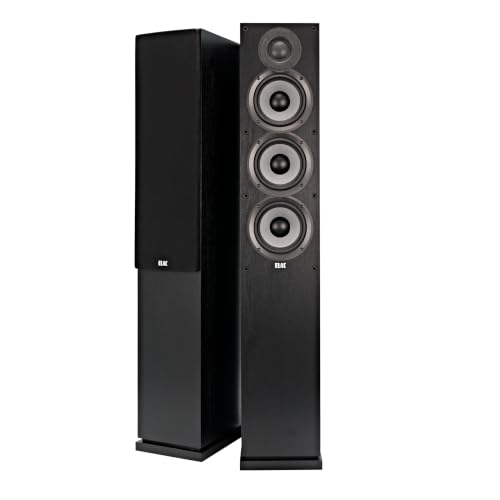
The ELAC Debut 2.0 F6.2 is the largest tower in this group, with three 6.5-inch aramid-fiber woofers working below a cloth-dome tweeter. That driver area moves a lot of air, so the F6.2 reaches down to 39 Hz and can carry a stereo system on its own in a medium to large room. The cabinet is braced MDF with three rear-firing ports, and the crossover splits at 90 Hz and 2,200 Hz for a smooth handover between drivers. At more than 43 inches tall and nearly 44 pounds, it is a substantial piece of furniture that rewards careful placement.
Watch out for: The rear ports need breathing room from the back wall, and it is sold as a single speaker, so buy two for a pair.
3. ELAC Debut 2.0 F5.2
3. ELAC Debut 2.0 F5.2
Best for: Smaller rooms and flats that need three-way sound from a shorter, lighter tower.
The ELAC Debut 2.0 F5.2 uses the same three-way recipe as its bigger sibling, but with three 5.25-inch woofers in a shorter 40-inch cabinet. It keeps the cloth-dome tweeter, the 6-ohm impedance and the 140-watt maximum input, and it reaches down to 42 Hz, which covers most music without help. The smaller woofers and lighter 34.4-pound cabinet make it easier to place in a compact room or a flat where a taller tower would crowd the space. It is the most room-friendly way to get the Debut 2.0 sound in a three-way tower.
Watch out for: It gives up some low-end weight next to the F6.2, and it is sold as a single speaker, so order two for stereo.
4. Fluance Signature HiFi HFF
4. Fluance Signature HiFi HFF
Best for: Large rooms and home theater front channels where scale and bass depth matter most.
The Fluance Signature HiFi HFF is the heavyweight of this group, with dual 8-inch woofers, a 5-inch woven glass-fiber midrange and a silk-dome tweeter in a cabinet over 47 inches tall. Its 8-ohm impedance makes it an easy load for most receivers, and the 89 dB sensitivity helps it fill a large room. The magnetic front grilles lift off cleanly with no visible fasteners, which suits the brief for removable grilles exactly. Outrigger stabilizers and floor spikes are included, so the tall cabinet stays steady on carpet and hard floors alike.
Watch out for: At more than 62 pounds per speaker, it needs two people to move safely, and its height dominates a small room.
5. Pioneer SP-FS52
5. Pioneer SP-FS52
Best for: A first three-way tower setup in a modest room, paired with a matching center channel for films.
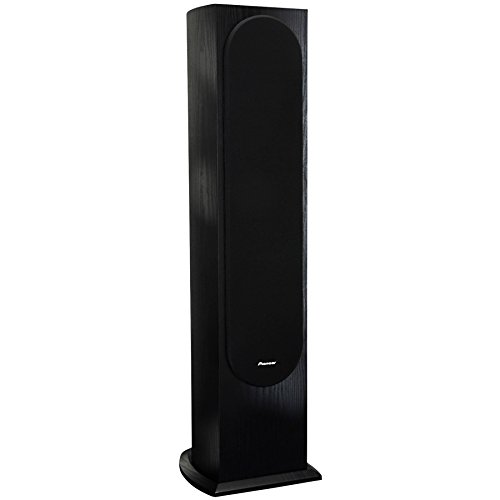
The Pioneer SP-FS52 is a three-way tower designed by Andrew Jones, with three 5.25-inch structured-surface woofers and a 1-inch soft-dome tweeter in a curved cabinet. The curved shape reduces internal standing waves, and the 8-element crossover blends the drivers into a coherent whole. It handles up to 130 watts and reaches down to 40 Hz, which is strong for a tower of its size. The detachable grilles fit the brief, and the slim 35-inch cabinet suits rooms where a taller tower would look out of place.
Watch out for: It is sold as a single speaker, so order two for a stereo pair, and check current availability before ordering, since this is an older model.
Which One Fits Your Situation
A small living room with a stereo receiver
Choose the Sony SSCS3 or the ELAC F5.2. Both stand 40 inches tall or less, so they sit comfortably beside a television unit without crowding the wall. Their 6-ohm impedance matches most stereo receivers, and their modest footprints leave room for a rug and a coffee table. Keep the grilles on during the day for a tidy look, and pull them off in the evening when you sit down to listen.
Dedicated home theater front channels
Choose the Fluance Signature HiFi HFF or the ELAC F6.2. The Fluance brings dual 8-inch woofers and a dedicated midrange that keeps film dialogue clear at higher volumes, while the F6.2 brings three 6.5-inch woofers and deep bass that anchors action scenes. Place them the same distance from the listening seat, angle them slightly inward, and leave space behind the rear ports so the low end stays clean.
A large open-plan room
Choose the Fluance Signature HiFi HFF. Its tall cabinet, large woofers and 89 dB sensitivity help it fill an open space where smaller towers lose energy. Use the included outriggers and floor spikes to keep the cabinet steady, and give the rear port room to breathe. In a very large space, add a matching center channel so dialogue stays anchored to the screen from every seat.
A household with children or pets
Choose any tower here, but keep the grilles on. The grille is the cheapest protection a speaker has: it stops small fingers and curious paws from reaching the tweeter and woofer cones. Magnetic grilles are the easiest to remove and refit when guests leave, while peg-mounted grilles reward a straight, gentle pull. Teach everyone in the house that the grilles stay on unless an adult takes them off.
Common Mistakes
Pushing a rear-ported tower hard against the wall, which makes bass sound boomy and uneven instead of deep and controlled.
Ordering one speaker when the listing sells a single unit, then discovering you need a second one for stereo.
Matching a 6-ohm tower with a receiver that is only rated for 8-ohm speakers, and running it hard for long sessions.
Leaving grilles off in a busy room, where a bump or a pet can dent a tweeter or puncture a woofer cone.
Judging a tower by woofer size alone, while ignoring the midrange driver and crossover that carry most of the voices and instruments.
Frequently Asked Questions
What does three-way mean in a floor-standing speaker?
Three-way means the speaker splits sound into three bands. A tweeter handles the highs, a dedicated midrange driver carries voices and most instruments, and one or more woofers handle the bass. A crossover network directs each frequency to the right driver, so no single driver has to cover the whole range, which keeps detail and clarity steadier across different kinds of music and film sound.
Do removable grilles change the sound?
A grille can soften the very highest frequencies slightly, but the effect is small on most towers, and many listeners never notice it. Removing the grille gives you the drivers with nothing in front of them, while fitting it protects the cones and gives the cabinet a cleaner look. Try both ways in your own room and keep the setup you prefer for everyday listening.
Do I need a subwoofer with three-way floor-standing speakers?
Not always. Towers such as the ELAC F6.2 and the Fluance HFF reach low enough for most music and many films on their own. A subwoofer helps mainly in large rooms, or when you want the deepest bass for action films and bass-led music. If you add one later, cross it over below the towers so it supports them instead of overlapping with them.
Can I mix brands for the left and right speakers?
No, the left and right speakers should always be an identical matched pair, so the sound stays balanced and the stereo image stays centered. You can mix brands between the front pair and the surround speakers, but the two front towers must match in model, driver layout and voicing. Buying the same model twice is the safe way to get that match.
A
admin
We compare specs, materials and verified owner reviews before a product earns a spot. Rankings are never paid.
Affiliate disclosure. As an Amazon Associate we earn from qualifying purchases at no extra cost to you. Prices accurate as of the date shown.
The best looking Titan armor sets in Destiny 2, ranked for collectors. Compare the top Titan figures and statues that bring the iconic armor to your shelf.
The best portable iPhone chargers are power banks matched to your port. Compare five MagSafe, built-in cable, and plug-in battery packs for iPhone here.
Four belt-drive turntables that change speed electronically, by switch, button or servo control, with no belt moving by hand: Pro-Ject, Fluance and Denon picks compared.
The best hobby greenhouses compared on footprint, frame and glazing: twin-wall polycarbonate kits, a cedar walk-in with a fan, and a roomy PE tunnel house.
Looking for the best tube integrated amplifiers for dedicated listening rooms? Compare four valve amps for warm sound, speaker matching, and room size.


 4. Fluance Signature HiFi HFF
 5. Pioneer SP-FS52