We independently review everything we recommend. When you buy through our links, we may earn a commission. As an Amazon Associate we earn from qualifying purchases.
4 Best Two-Way Passive Bookshelf Speakers (November 2026)
Four passive two-way bookshelf speakers with wood and MDF cabinets compared on drivers, sensitivity and amplifier fit for stereo and home theater.
Four passive two-way bookshelf speakers with wood and MDF cabinets compared on drivers, sensitivity and amplifier fit for stereo and home theater.
Buying passive bookshelf speakers is really two decisions folded into one: the amplifier you already own or plan to buy sets the ceiling, and the cabinet decides how the pair lives in your room. A wood or MDF cabinet is not decoration alone. Its stiffness and mass shape how cleanly the drivers work, and its finish decides whether the speakers blend with your furniture or fight it. This guide keeps the field narrow on purpose: every pick is a passive two-way design in a wood-based cabinet.
It serves listeners building a first stereo system around a receiver, home theater owners adding front or surround channels, and desktop listeners moving up from powered speakers. The four pairs below were chosen from the names and specifications on their Amazon pages: each listing states a wood, wood grain, or MDF cabinet, a two-way driver layout, and the figures that matter for matching an amplifier, such as impedance, sensitivity, and power handling.
Quick Picks
As an Amazon Associate we earn from qualifying purchases.
Product
Best for
Key spec
Klipsch R-51M
Lively sound from a modest amplifier
93 dB sensitivity, 5.25-inch IMG woofer
ELAC Debut 2.0 B6.2
Balanced music listening in larger rooms
6.5-inch aramid fiber woofer
Fluance SX6
A walnut finish that suits furniture
5-inch woofer, wood enclosure
Edifier P12
Wall-mounted surround channels
Built-in wall-mount bracket
How to Choose
Cabinet material and finish
MDF is the default cabinet material in this class because it is dense, uniform, and free of the voids that can color sound, and every pair here uses a wood-based cabinet of some kind. The Klipsch R-51M wraps reinforced MDF in a textured wood grain vinyl, the ELAC B6.2 uses an MDF cabinet in black ash vinyl, and the Fluance SX6 and Edifier P12 list wood enclosures outright. A vinyl wrap shrugs off scuffs and wipes clean, while a wood finish reads warmer beside furniture. Check the listing’s material line before you buy, because lookalike models in the same range sometimes swap cabinet materials between finishes.
Woofer size and room size
Driver diameter sets how much air a pair can move, and the listings here span three sizes. The Edifier P12 uses a 4-inch bass driver, which suits a desk or a small bedroom but runs out of depth on film soundtracks. The Klipsch R-51M and Fluance SX6 sit in the middle with 5.25-inch and 5-inch woofers, a comfortable match for living rooms. The ELAC B6.2 carries the largest woofer at 6.5 inches and the deepest listed response, 44Hz, so it fills bigger spaces without help. Match the woofer to the room first; a subwoofer can be added later, but cabinet size cannot shrink.
Sensitivity, impedance and amplifier power
Three figures on the listing decide whether your amplifier is a good match. Sensitivity tells you how loud a speaker plays on a given watt: the Klipsch R-51M lists 93 dB, so a small receiver still reaches satisfying volume, while the Fluance SX6 lists 89 dB and asks for a little more. Impedance is the electrical load; the Klipsch and Fluance are 8-ohm pairs, while the ELAC and Edifier are 6 ohms, which most receivers handle but some compact amps dislike. Finally, compare the power handling band, such as 30 to 100 watts on the Fluance, with the per-channel output of your amp.
Ports, placement and mounting
Where the bass port fires decides how close a speaker can sit to a wall. The Klipsch R-51M and Fluance SX6 both vent through the rear, so each needs open space behind the cabinet to keep bass clean; pushed flat against a wall, low notes thicken and blur. The Edifier P12 answers the same problem differently, with a built-in wall-mount bracket that lets the cabinet hang as a surround channel. Think about the shelf, stand, or wall first, then check the listing for port position, cabinet depth, and any mounting hardware, because those three details rule out more pairs than sound quality does.
The 4 Best Options
Klipsch R-51M Bookshelf Speakers
Top Pick
Klipsch R-51M Bookshelf Speakers
Best for: Front channels or stereo in small to mid-size rooms, driven by a modest receiver.
Two-way bookshelf speakers, sold as a pair; passive, so a separate amplifier or receiver is required
1-inch aluminum LTS tweeter in a 90 x 90 square Tractrix horn
5.25-inch spun-copper IMG woofer
Reinforced MDF cabinet with scratch-resistant textured wood grain vinyl finish
The R-51M is the pair for listeners who want energy without buying a bigger amplifier first. Its horn-loaded tweeter and 93 dB sensitivity mean even a modest receiver reaches lively volume, and the spun-copper woofer gives the black cabinet a look that stands apart from plain boxes. Klipsch builds the enclosure from reinforced MDF under a textured wood grain vinyl, so it shrugs off the knocks of a family room. It suits front channels in a small home theater or a stereo setup in a living room where clarity at everyday volume matters more than deep bass.
ELAC Debut 2.0 B6.2 Bookshelf Speakers
Runner-Up
ELAC Debut 2.0 B6.2 Bookshelf Speakers
Best for: Music listening in medium and large rooms where one pair must cover the full range.
Two-way bass reflex bookshelf speakers, sold as a pair; passive
The Debut 2.0 B6.2 is the music-first pick, built around the largest woofer in this group. Its 6.5-inch aramid fiber cone and 1-inch cloth dome tweeter reach a listed 44Hz to 35kHz, so string quartets and film scores keep their detail without a subwoofer doing the heavy lifting. The MDF cabinet wears a black ash vinyl finish that disappears beside dark furniture. Choose it if your room is medium or large, your amplifier is comfortable with a 6-ohm load, and you would rather have one balanced pair than a brighter, more forward sound.
Fluance SX6 Bookshelf Speakers
Fluance SX6 Bookshelf Speakers
Best for: A visible stereo corner or turntable setup where the walnut finish is part of the appeal.
Two-way, two-driver bookshelf speakers, sold as a pair; external amplifier required
1-inch soft dome tweeter, ferrofluid cooled, neodymium
5-inch polymer treated woofer with butyl rubber surround
Wood enclosure (the listing gives the enclosure material as wood), natural walnut finish
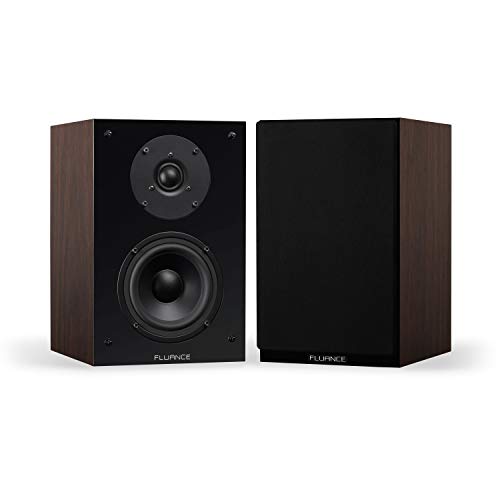
The SX6 is the pair you buy when the speakers will be seen as much as heard. Fluance lists the enclosure material as wood, and this listing is the natural walnut variant, a warm finish that sits comfortably on a sideboard or credenza. Behind the grille, a 5-inch polymer treated woofer and a ferrofluid cooled soft dome tweeter cover a listed 60Hz to 20kHz, with an easy 8-ohm load that suits almost any receiver. It fits a music-first stereo corner, a turntable setup, or front channels where the cabinet has to earn its place visually.
Edifier P12 Passive Bookshelf Speakers
Edifier P12 Passive Bookshelf Speakers
Best for: Wall-mounted rear surrounds and compact rooms with little shelf space.
Two-way passive bookshelf speakers, sold as a pair; amplifier or receiver required
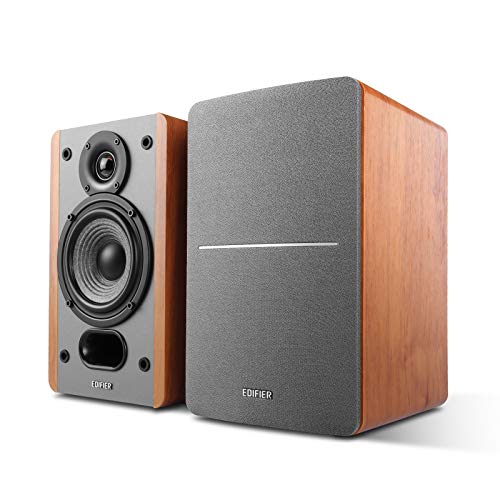
The P12 is the smallest and simplest pair here, made for rooms where shelf space is already spoken for. Its wood enclosure carries a 4-inch bass driver and a 19mm silk dome tweeter, and a bracket is built into the back of each cabinet, so the pair can hang on a wall as rear surrounds without extra hardware. Speaker wires are in the box, which keeps the shopping list short. Pick it for a den, bedroom, or apartment theater where compact cabinets and tidy mounting matter more than filling a big room.
Which One Fits Your Situation
You own a modest receiver and listen at everyday volume
The Klipsch R-51M asks the least of your amplifier. Its 93 dB sensitivity turns limited watts into comfortable volume, and the horn-loaded tweeter keeps dialogue clear at the levels most living rooms actually use. If your receiver is an older or entry model and the room is small or mid-size, this is the pair that will sound lively without pushing the amp hard.
Music matters most and the room is not small
The ELAC Debut 2.0 B6.2 is the balanced choice. Its 6.5-inch woofer and listed response down to 44Hz give bass lines real weight, and the cloth dome tweeter keeps long listening sessions easy on the ear. Pick it when the pair will anchor a stereo system in a medium or large room and you can give a 6-ohm load the amplifier it deserves.
The speakers sit on furniture everyone sees
The Fluance SX6 earns its place visually. The natural walnut finish and wood enclosure suit a sideboard, credenza, or media console far better than a plain black box, and the 8-ohm load pairs with nearly any receiver. Choose it for a turntable corner or a living room stereo where the cabinets are part of the furniture, not hidden behind it.
Shelf space is gone and surrounds must hang
The Edifier P12 solves the placement problem directly. A bracket is built into each wood cabinet, so the pair hangs on the wall as rear surrounds with no extra hardware, and the included speaker wires shorten the shopping list. Pick it for apartments, dens, and bedrooms where the only free surface is the wall and the system plays at neighbor-friendly volume.
Common Mistakes
Buying a passive pair and expecting sound out of the box: none of these speakers has an amplifier inside, so plan on a receiver or integrated amp if you do not already own one.
Matching by wattage alone: a high power handling figure means little if sensitivity is low; a 93 dB pair on a small amp will play louder than an 89 dB pair on a bigger one.
Ignoring impedance: 6-ohm speakers like the ELAC and Edifier are safe with most receivers, but some compact amplifiers are only specified for 8 ohms, so check the amp’s manual first.
Jamming rear-ported cabinets against a wall: the Klipsch and Fluance vent through the back, and too little clearance behind them makes bass boomy and muddy.
Judging the cabinet by the photo alone: finishes vary between listings of the same model, so read the material and color lines on the listing before ordering.
Frequently Asked Questions
Do passive bookshelf speakers need an amplifier?
Yes. A passive speaker has no built-in power, so it stays silent until an amplifier or AV receiver feeds it through speaker wire. Every pair in this guide works that way, including the Edifier P12, whose listing states plainly that an amplifier or receiver is needed. If you already own a receiver, you are ready; if not, the amplifier is part of the purchase.
What does a wood or MDF cabinet actually do?
A cabinet’s job is to stay quiet while the drivers work. Dense, stiff panels flex less, so less of the sound you hear is the box itself joining in. That is why the listings in this guide make a point of cabinet construction, from reinforced MDF in the Klipsch to the wood enclosures Fluance and Edifier list. The finish then decides how the pair looks in the room.
How much amplifier power do I need?
Look at sensitivity before wattage. A pair listed at 93 dB, like the Klipsch R-51M, reaches comfortable volume on a small receiver, while an 89 dB pair needs more power for the same level. Stay inside the speaker’s listed handling band, such as 30 to 100 watts for the Fluance SX6, and confirm the amplifier supports the speaker’s impedance, 6 or 8 ohms here.
Can bookshelf speakers go on a wall?
Some can, but the method differs by model. The Edifier P12 has a bracket built into the cabinet, so it hangs directly. The Klipsch R-51M and Fluance SX6 vent through rear ports and are happier on stands or shelves with space behind them. Before mounting any pair, check its weight, port position, and whether the listing names wall hardware or keyhole fittings.
A
admin
We compare specs, materials and verified owner reviews before a product earns a spot. Rankings are never paid.
Affiliate disclosure. As an Amazon Associate we earn from qualifying purchases at no extra cost to you. Prices accurate as of the date shown.
The best looking Titan armor sets in Destiny 2, ranked for collectors. Compare the top Titan figures and statues that bring the iconic armor to your shelf.
The best portable iPhone chargers are power banks matched to your port. Compare five MagSafe, built-in cable, and plug-in battery packs for iPhone here.
Four belt-drive turntables that change speed electronically, by switch, button or servo control, with no belt moving by hand: Pro-Ject, Fluance and Denon picks compared.
The best hobby greenhouses compared on footprint, frame and glazing: twin-wall polycarbonate kits, a cedar walk-in with a fan, and a roomy PE tunnel house.
Looking for the best tube integrated amplifiers for dedicated listening rooms? Compare four valve amps for warm sound, speaker matching, and room size.
Compare five three-way floor-standing speakers with removable grilles, with driver layouts, amplifier matching and room-fit guidance for November 2026.


 Edifier P12 Passive Bookshelf Speakers