We independently review everything we recommend. When you buy through our links, we may earn a commission. As an Amazon Associate we earn from qualifying purchases.
Best Logging Bench Multimeters for Prototype Testing
Find the best logging bench multimeters for prototype testing, with data logging, USB and LAN links, and clear guidance for choosing a bench meter.
Find the best logging bench multimeters for prototype testing, with data logging, USB and LAN links, and clear guidance for choosing a bench meter.
Introduction
Prototype testing asks a bench multimeter to do more than show a single number. A circuit under test drifts as it warms up, a battery discharges over hours, and a regulator behaves differently under load than it does at idle. A logging bench multimeter records those changes over time, so you can see what happened while you were looking elsewhere. Instead of watching a display for hours, you set the meter to record, run the test, and study the trend when it finishes.
OUR TOP PICK
Keysight 34465A 6.5-Digit Truevolt Digital Multimeter
The best logging bench multimeters for prototype testing combine solid measurement accuracy with a practical way to capture and move data. Some store readings in internal memory, some send readings to a computer over USB or LAN, and the strongest options do both. The right choice depends on how long your tests run, how many readings you need, and how you plan to look at the data afterward.
This guide explains what to look for in a logging bench meter, then presents four instruments that suit prototype work. Each one is a true bench multimeter with a logging function, not a handheld meter with a bench stand. The comparison covers resolution, reading speed, logging depth, and connectivity, so you can match the instrument to the way you test.
How to Choose a Logging Bench Multimeter for Prototype Testing
Resolution and counts
Resolution tells you how fine a change the meter can show. A 4.5-digit meter displays up to 55,000 counts, which suits most prototype measurements such as supply rails, divider outputs, and sensor signals. A 5.5-digit meter reaches 240,000 counts and shows smaller steps, which helps when you measure reference voltages or compare two close values. A 6.5-digit meter resolves finer still and suits precision work such as checking a voltage reference or tracking slow drift over a long test. Higher resolution is not always better for every job, but for logging work it matters because small drift is often the signal you are trying to catch.
Logging depth and interval
Logging depth is the number of readings the meter can store. A meter with a 1,000-point log suits short tests, such as watching a supply settle over a few minutes. A meter with a 1M-point log can record a long overnight run without stopping. Also check the logging interval: a minimum interval of 5 ms captures fast changes, while a longer interval stretches a fixed memory across a longer test. Decide how long your typical test runs before choosing, because a log that fills up halfway through a test leaves the second half unrecorded.
Reading speed
Reading speed, stated in readings per second, sets how quickly the meter can sample. A rate of 65 readings per second is enough for slow drift and thermal tests. A rate of 123 or 150 readings per second gives a denser record of a changing signal. Very fast meters reach thousands of readings per second, which suits capturing short events. For most prototype testing, a rate between 65 and 150 readings per second covers the common cases, and the logging interval you set matters more than the maximum rate.
Connectivity and software
A logging meter is only useful if you can get the data out. USB is the most common link and suits a bench computer beside the meter. LAN lets the meter sit on a network so a test can run from another room. RS-232 and GPIB appear on older and higher-end instruments and suit automated test setups. SCPI support matters if you plan to control the meter from a script, since it lets a short program set the function, start a log, and pull readings back. Check that the meter includes the interface you plan to use, and confirm that the maker supplies software or a programming manual for it.
Measurement functions
A prototype bench meter should cover DC and AC voltage and current, resistance in two-wire and four-wire form, capacitance, continuity, diode testing, frequency, and temperature. Four-wire resistance matters when you measure low-value resistors or check a sense resistor, because it removes lead resistance from the result. Temperature measurement, through a thermocouple or a resistance sensor, lets the same instrument track a board warming up during a test. True RMS AC measurement matters whenever the signal is not a clean sine wave, which is common with switching supplies and motor drives.
Display and bench fit
A dual display shows two quantities at once, such as DC voltage and frequency, which saves time during a test. A trend chart mode turns a log into a visible line on the screen, so you can spot drift without exporting data first. Bench size matters too: a compact meter fits beside a breadboard and a power supply, while a full-size instrument suits a permanent bench with rack space. Check the depth of the unit against your bench before ordering, since some bench meters are deeper than they look.
Top Picks
Keysight 34465A 6.5-Digit Truevolt Digital Multimeter
Top Pick
Keysight 34465A 6.5-Digit Truevolt Digital Multimeter
The Keysight 34465A is a 6.5-digit Truevolt bench multimeter built for precision bench and system measurements. It delivers 1,200,000 counts and a reading speed of up to 5,000 readings per second, which makes it the fastest and most detailed instrument in this guide. Its data logging memory holds a large record of readings, and the meter connects over LAN and USB, so logged data moves to a computer without a special adapter.
This meter suits prototype testing where small changes matter. A 6.5-digit display shows fine steps in a reference voltage, and the fast reading rate captures short events that a slower meter would miss. The graphical display can show a trend chart, a histogram, and statistics, so you can inspect a log on the meter itself before exporting it. It measures DC and AC voltage and current, two-wire and four-wire resistance, capacitance, frequency, temperature, continuity, and diode junctions, covering the full set of functions a prototype bench needs.
Choose the 34465A when your prototypes include precision analog stages, voltage references, or low-current circuits where fine resolution and a deep log justify a full-size lab instrument. It is the most capable meter here, and it fits a bench where measurement quality is the priority.
The Rigol DM3058E is a 5.5-digit bench multimeter with 240,000 counts and a dual display. It measures DC voltage from 200 mV to 1000 V, true RMS AC voltage from 200 mV to 750 V, DC current from 200 microamps to 10 A, and AC current from 20 mA to 10 A. It also covers two-wire and four-wire resistance, capacitance, diode testing, continuity, frequency, and temperature, with built-in compensation for thermocouples.
Logging on the DM3058E comes through its datalogging software options and remote programming from its interfaces. It connects over USB and RS-232, and the programming guide supports SCPI commands, so a script can set up a measurement, collect readings, and save them to a file. Its reading speed reaches 123 readings per second, which gives a dense record for tests that run over minutes or hours. The dual display shows a second quantity alongside the main reading, which helps when you watch a supply rail and its ripple at the same time.
Choose the DM3058E when you want a proven 5.5-digit bench meter with solid logging support at a mid-range position. It suits prototype benches that need more resolution than a 4.5-digit meter without moving to a full 6.5-digit lab instrument.
OWON XDM3041 4.5-Digit Bench-Type Digital Multimeter
The OWON XDM3041 is a 4.5-digit bench multimeter with a built-in data-logger mode, which makes it a direct match for this guide. Its logging length reaches 1M points with a minimum logging duration of 5 ms, so it can record a long test at a fine interval and show the result as a chart or a table on its 4-inch LCD. It reads up to 150 readings per second and measures DC voltage from 600 mV to 1000 V, true RMS AC voltage to 750 V, DC and AC current to 10 A, resistance, capacitance, frequency, diode junctions, continuity, and temperature.
Connectivity is a strength here. The XDM3041 carries USB device and USB host ports, RS-232, LAN, and an external trigger input, and it supports SCPI for remote control and data sharing. That combination suits automated prototype tests, where a computer starts the log, the meter records on its own, and the data comes back over the network. The dual-line display and trend chart mode let you watch a log build on the screen, and the 1M-point internal record means many tests never need a computer attached at all.
Choose the XDM3041 when long logging runs are the core of your prototype work. Its deep internal memory, fast logging interval, and broad set of interfaces make it a strong fit for overnight soak tests, battery discharge runs, and thermal drift checks.
The OWON XDM1041 is a compact 4.5-digit bench multimeter with 55,000 counts and a 3.5-inch colour TFT display. It measures DC voltage with accuracy up to 0.05 percent, reads up to 65 times per second, and covers DC current from 500 microamps to 10 A, true RMS AC voltage and current, resistance, capacitance, temperature with K-type and PT100 sensors, diode testing, and continuity. Its small footprint suits a crowded prototype bench, where it sits beside a breadboard without crowding the power supply.
Logging on the XDM1041 runs through its USB port with SCPI support, so a short script can collect readings over a test and save them for later study. It also includes a 1,000-point data log for short records on the meter itself. That combination suits prototype work where the meter logs a supply rail or a sensor output to a laptop during a test, and the compact size makes it easy to move between benches or carry to a test site.
Choose the XDM1041 when bench space is tight and your logging runs through a computer. It gives you a true bench meter with USB logging at a compact size, and it works well as a first logging bench meter for a prototype bench.
Comparison Table
Product
Key Feature
Best For
Keysight 34465A
6.5-digit Truevolt, up to 5,000 readings per second, LAN and USB logging
Precision prototypes and fine drift measurements
Rigol DM3058E
5.5-digit, 240,000 counts, 123 readings per second, USB and RS-232
Mid-range bench work with scripted logging
OWON XDM3041
Data-logger mode, 1M-point log, 5 ms interval, USB, LAN, RS-232
Long overnight logging runs
OWON XDM1041
55,000 counts, compact size, USB SCPI logging, 1,000-point log
Small benches and computer-based logging
Buying Guide
Match logging depth to your test length
Start by writing down how long your tests run. A 30-minute thermal soak needs far less memory than an overnight battery discharge test. A 1,000-point log with a one-second interval covers about 16 minutes, while a 1M-point log with the same interval covers more than 11 days. If your tests run overnight, choose a meter with a deep internal log or a reliable computer link, and confirm the interval you need before you buy.
Decide how the data leaves the meter
Some prototype benches keep a laptop beside the meter, so a USB link is enough. Others run tests in a rack or another room, where LAN matters. If you automate tests with scripts, SCPI support is the feature to confirm, since it lets your program control the meter and pull readings back in a standard way. Check the interface list on the listing and the maker page, and do not assume a meter has LAN just because a similar model does.
Pick resolution for the signal, not the shelf
A 4.5-digit meter handles most prototype measurements well, including supply rails, logic levels, and sensor outputs. Move to 5.5 digits when you measure references, compare close values, or track small drift over a long log. Move to 6.5 digits when your work involves precision analog design or calibration checks. Higher resolution also means more digits to read in a log, so match the meter to the smallest change you actually need to see.
Check the functions you use every day
Every meter in this guide covers the core set of voltage, current, resistance, capacitance, continuity, diode, frequency, and temperature functions. The differences sit in the details: four-wire resistance for low-value measurements, temperature sensor types, and the maximum current range. If you measure a sense resistor or a low-value shunt, four-wire resistance is worth confirming. If you log board temperature during a test, check which sensor types the meter accepts.
Plan the bench layout
Bench meters vary in depth and height more than they appear to in photos. Measure your bench space and check the meter dimensions before ordering, especially if the meter will sit under a shelf or beside a tall power supply. A compact meter such as the XDM1041 fits where a full-size instrument will not, while a full-size meter such as the 34465A suits a permanent bench with room to spare. Leave space behind the meter for cables, since USB, LAN, and power leads all exit from the rear.
Think about calibration and care
A logging bench meter is a measurement reference, so treat it as one. Keep the test leads in good condition, since damaged leads add noise to a log. Store the meter away from strong heat sources when it is not in use, and keep the vents clear so the internal temperature stays stable during a long test. Follow the maker guidance on calibration intervals, and keep a note of the calibration date with the meter so a future log can be traced back to a known state.
FAQ
What is a logging bench multimeter?
A logging bench multimeter is a bench instrument that records a series of readings over time instead of showing only the current value. It stores the readings in internal memory, sends them to a computer over USB, LAN, or RS-232, or both. The log can then be viewed as a table or a trend chart, which shows how a voltage, current, or temperature changed during a test.
How much logging memory do I need for prototype testing?
It depends on the test length and the interval between readings. A 1,000-point log suits short tests of a few minutes. A 1M-point log suits overnight runs and long thermal tests. As a rough guide, divide the memory by the interval: a 1,000-point log at one reading per second covers about 16 minutes, while a 1M-point log at the same rate covers more than 11 days. Choose a depth that covers your longest normal test with room to spare.
Is a 4.5-digit meter enough for prototype testing?
For most prototype work, yes. A 4.5-digit meter with 55,000 counts resolves supply rails, sensor outputs, and logic levels with room to spare, and it logs drift clearly. Move to 5.5 or 6.5 digits when you measure voltage references, compare two close values, or track very small changes over a long test. The right resolution is the one that shows the smallest change you need to see.
Can I log data to a computer with these meters?
Yes. Every meter in this guide connects to a computer: the Keysight 34465A and the OWON XDM3041 use LAN and USB, the Rigol DM3058E uses USB and RS-232, and the OWON XDM1041 uses USB. All four support SCPI commands, which let a script control the meter and collect readings. Check that your computer has the matching port and that the maker supplies software or a programming manual for the link you plan to use.
Conclusion
The best logging bench multimeters for prototype testing record what happens during a test, not just what the display shows at one moment. The Keysight 34465A leads on resolution and speed for precision work. The Rigol DM3058E gives proven 5.5-digit measurement with scripted logging for a mid-range bench. The OWON XDM3041 stands out for long logging runs, with a 1M-point internal log and a wide set of interfaces. The OWON XDM1041 fits small benches and computer-based logging at a compact size.
Choose by test length first, then by resolution, then by the interface you will use to move the data. A meter that matches those three points will log your prototype tests cleanly and give you a record you can trust when you study the results.
Disclosure: As an Amazon Associate, we earn from qualifying purchases.
A
admin
We compare specs, materials and verified owner reviews before a product earns a spot. Rankings are never paid.
Affiliate disclosure. As an Amazon Associate we earn from qualifying purchases at no extra cost to you. Prices accurate as of the date shown.
The best looking Titan armor sets in Destiny 2, ranked for collectors. Compare the top Titan figures and statues that bring the iconic armor to your shelf.
The best portable iPhone chargers are power banks matched to your port. Compare five MagSafe, built-in cable, and plug-in battery packs for iPhone here.
Four belt-drive turntables that change speed electronically, by switch, button or servo control, with no belt moving by hand: Pro-Ject, Fluance and Denon picks compared.
The best hobby greenhouses compared on footprint, frame and glazing: twin-wall polycarbonate kits, a cedar walk-in with a fan, and a roomy PE tunnel house.
Looking for the best tube integrated amplifiers for dedicated listening rooms? Compare four valve amps for warm sound, speaker matching, and room size.
Compare five three-way floor-standing speakers with removable grilles, with driver layouts, amplifier matching and room-fit guidance for November 2026.

 Keysight 34465A 6.5-Digit Truevolt Digital Multimeter
 Rigol DM3058E 5.5-Digit Digital Multimeter
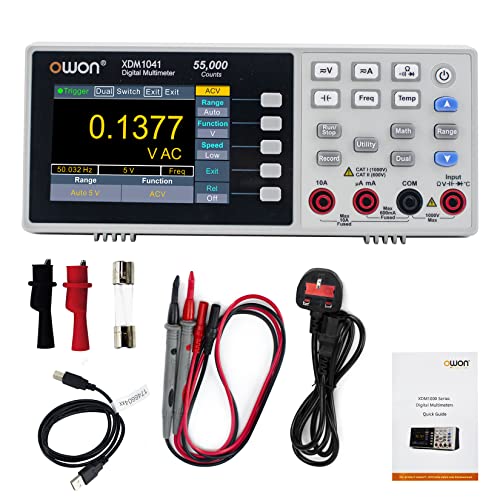 OWON XDM1041 Portable Bench Digital Multimeter