We independently review everything we recommend. When you buy through our links, we may earn a commission. As an Amazon Associate we earn from qualifying purchases.
4 Best Tube Integrated Amplifier Picks (November 2026)
Looking for the best tube integrated amplifiers for dedicated listening rooms? Compare four valve amps for warm sound, speaker matching, and room size.
Looking for the best tube integrated amplifiers for dedicated listening rooms? Compare four valve amps for warm sound, speaker matching, and room size.
A dedicated listening room changes what an amplifier has to do. The space is quiet, the speakers sit in fixed positions, and every listening session lasts an hour or more, so the amp’s character becomes the character of the whole system. A tube integrated amplifier suits that setting because it combines the preamp and power amp in one chassis while adding the warm, open midrange that valve designs are known for. The hard part is matching power output to your speakers, since low-wattage single-ended designs need efficient speakers while push-pull designs drive a wider range.
This guide is for listeners who have a room set aside for music and want a valve amplifier as its centerpiece. The four amplifiers below were chosen from names and specifications on Amazon product pages, covering a high-power push-pull design, two single-ended valve designs, and one modern hybrid with digital inputs. Each one fits a different room size, speaker type, and budget, so you can match the amplifier to the system you already own.
Quick Picks
As an Amazon Associate we earn from qualifying purchases.
Product
Best for
Key spec from title
Willsenton R8
Larger rooms and demanding speakers
KT88 tubes, 45 watts per channel in ultralinear mode
Reisong A10 EL34
Small rooms with efficient bookshelf speakers
Single-ended Class A, 12 watts per channel
BoyuuRange A50 MKIII 300B
Vocal and jazz listening in a quiet room
300B tubes, 7.6 watts maximum output power
Dayton Audio HTA100
A modern setup with a turntable and digital sources
Hybrid tube preamp, 65 watts RMS per channel at 4 ohms
How to Choose
Match watts to speaker sensitivity first
Power output only makes sense next to your speakers’ sensitivity rating. A single-ended amplifier producing around 8 to 12 watts per channel can fill a small room beautifully when paired with speakers rated at 90 decibels or higher, but the same amplifier will sound thin and strained driving 85-decibel speakers in a large room. Check the sensitivity figure on your speaker’s specification sheet before choosing. If your speakers sit below 88 decibels, a push-pull design with 40 watts or more per channel is the safer starting point, since it keeps dynamics intact at normal listening levels.
Decide between single-ended and push-pull circuits
Single-ended and push-pull circuits sound different, and the difference matters more than brand names. Single-ended designs use one output tube per channel, which produces a rich midrange and a relaxed presentation that suits vocals, acoustic instruments, and jazz. Push-pull designs use pairs of output tubes working in opposite phases, which delivers more power, tighter bass, and better control over larger speakers. If your room is small and your taste runs to intimate recordings, single-ended is a strong choice. If you play orchestral music or rock at higher volumes, push-pull is the practical pick.
Plan for heat, space, and ventilation
Vacuum tubes run hot, and a dedicated listening room can trap that heat if the amplifier sits inside a closed cabinet. Give the amplifier open air above and behind it, with several inches of clearance on every side, and keep it away from curtains and stacked components. Heavy tube amplifiers also need a sturdy, level shelf, since some weigh more than 50 pounds and their transformers concentrate that weight in one spot. Measure your rack before ordering, and remember that a tube cage adds a small amount of height. Good ventilation also extends tube life.
Check inputs, outputs, and tube replacement costs
Count your sources before you buy, because tube integrated amplifiers vary widely in connectivity. Some offer only two or three RCA line inputs, while others add a phono stage for a turntable, optical and coaxial digital inputs, USB, Bluetooth, and a subwoofer output. A headphone output is useful for late-night listening in the same room. Also look up replacement tube prices for the exact tube types the amplifier uses, since output tubes wear out after a few thousand hours and a matched set of four power tubes costs far more than a pair of small driver tubes.
The 4 Best Options
Willsenton R8
Top Pick
Willsenton R8
Best for: Larger listening rooms and speakers that need real power.
Four KT88 power tubes, switchable to EL34 tubes
25 watts per channel in triode mode, 45 watts per channel in ultralinear mode
Larger listening rooms and speakers that need real power.
Watch out for
Confirm the voltage version matches your region, since the amplifier is sold in 120V and 230V versions, and check that your rack can hold a 57.5-pound chassis.
The Willsenton R8 is the most flexible amplifier in this group, and it suits a listener who wants one valve amplifier to handle many kinds of music. It runs four KT88 power tubes in a push-pull circuit, with a switch that changes between triode and ultralinear modes, so the same amplifier can sound soft and smooth for vocals or open and powerful for large-scale recordings. The front panel carries a bias meter, a headphone output, and a remote control, which makes it easy to live with in a dedicated room.
Watch out for: Confirm the voltage version matches your region, since the amplifier is sold in 120V and 230V versions, and check that your rack can hold a 57.5-pound chassis.
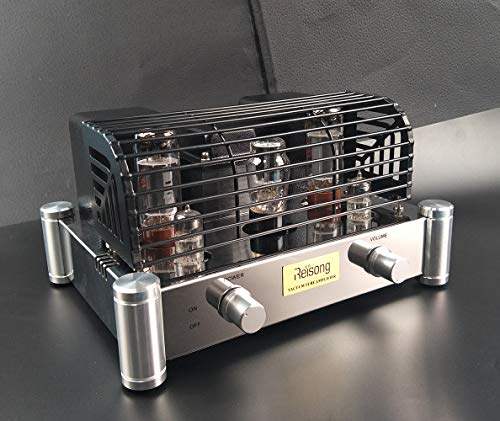
Reisong A10 EL34
Runner-Up
Reisong A10 EL34
Best for: Small rooms with efficient bookshelf speakers and acoustic music.
Two EL34 output tubes, two 6N2J preamp tubes, one 5Z4PJ rectifier tube
Single-ended Class A circuit, 12 watts per channel
The Reisong A10 EL34 is the entry point into single-ended valve sound, and it works best in a small room with efficient speakers. Its circuit uses two EL34 output tubes in a single-ended Class A layout, hand-wired point to point, which keeps the signal path short and the midrange warm and present. The chrome chassis and simple front panel suit a tidy listening room, and the amplifier rewards listeners who value tone and texture over sheer volume.
Watch out for: At 12 watts per channel, this amplifier needs speakers rated at 90 decibels or higher, so check your speaker sensitivity before ordering.
BoyuuRange A50 MKIII 300B
The BoyuuRange A50 MKIII 300B is built around the 300B output tube, which many listeners consider the reference for vocal reproduction. Its single-ended Class A circuit produces a small amount of power, so it belongs in a quiet room with efficient speakers, where its smooth midrange and wide soundstage can carry a listening session. A detachable tube cage protects the glass tubes, and the front panel carries VU meters that suit the look of a dedicated listening space.
Specs
300B output tubes with 6SN7 driver tubes
Single-ended Class A circuit
Maximum output power: 7.6W
Two channels, 120 volts
RCA inputs, PRE-IN, and balanced inputs
Detachable protective tube cage
Dimensions: 14.76 x 11.42 x 7.09 in; weight: 18 kg
Best for: Vocal, jazz, and classical listening in a quiet room with efficient speakers.
Watch out for: With 7.6 watts of maximum output, this amplifier is only suitable for speakers rated at 90 decibels or higher, and the listing mixes MKIII and MKV naming, so confirm the exact version on the product page.
Dayton Audio HTA100
Dayton Audio HTA100
Best for: A modern listening room with a turntable, digital sources, and a subwoofer.
Hybrid design: tube preamp stage with Class A/B output stage
65 watts RMS per channel at 4 ohms, 100 watts peak
The Dayton Audio HTA100 takes a different approach by pairing a tube preamp stage with a solid-state Class A/B output stage, which gives it far more power than the pure valve designs here. It is the right choice when a listening room also serves as a general media space, because it accepts a turntable, a CD player, a computer, and a phone through Bluetooth, and it includes a subwoofer output for adding low-end support. Dual VU meters and bass and treble controls keep the front panel friendly.
Watch out for: This is a hybrid, not a pure valve amplifier, so the output stage is solid-state and the tube character comes from the preamp section only.
Which One Fits Your Situation
You have a large room and speakers that need power
Pick the Willsenton R8. Its 45 watts per channel in ultralinear mode drive speakers that a low-power single-ended amplifier cannot control, and the triode switch lets you soften the sound for vocal recordings without changing equipment. The remote control and headphone output also suit long sessions in a room built for listening.
You listen in a small room with efficient bookshelf speakers
Pick the Reisong A10 EL34. Its 12 watts per channel are enough for sensitive speakers in a compact space, and the single-ended Class A circuit delivers the warm midrange that makes acoustic music and vocals sound present. It is also the simplest amplifier here to place, since it weighs far less than the push-pull designs.
You want the classic 300B sound for vocals and jazz
Pick the BoyuuRange A50 MKIII 300B. The 300B tube is prized for vocal texture, and this amplifier pairs it with a simple single-ended circuit that keeps the signal path short. It needs efficient speakers and a quiet room, but in that setting it produces the most relaxed and spacious presentation of the four.
You need one amplifier for vinyl, digital, and a subwoofer
Pick the Dayton Audio HTA100. It is the only amplifier here with a built-in phono stage, optical and coaxial digital inputs, USB, Bluetooth, and a subwoofer output, so it connects every source in a modern listening room. Its 65 watts RMS per channel also handle a wider range of speakers than the pure valve designs.
Common Mistakes
Buying a low-wattage single-ended amplifier for speakers rated below 88 decibels, then wondering why the sound stays thin at normal volume.
Placing a tube amplifier inside a closed cabinet with no airflow, which traps heat and shortens tube life.
Ignoring replacement tube costs, since a matched set of four output tubes costs far more than a pair of driver tubes.
Choosing an amplifier with too few inputs, then needing an external switch box for a turntable or digital source.
Sitting the amplifier on a weak shelf, even though some valve amplifiers weigh more than 50 pounds.
Frequently Asked Questions
How many watts do I need for a dedicated listening room?
It depends on your speakers and your room size. A small room with speakers rated at 90 decibels or higher works well with 8 to 12 watts from a single-ended valve amplifier. A larger room, or speakers rated below 88 decibels, needs a push-pull design with 40 watts or more per channel to keep dynamics and bass control at normal listening levels.
Do tube amplifiers need a warm-up period before listening?
Yes, vacuum tubes sound their best after a short warm-up. Most valve amplifiers reach stable operation within 15 to 30 minutes of being switched on, and many include a mute delay that protects the tubes during start-up. Leave the amplifier on for the first part of a listening session, then judge the sound once the tubes have reached their working temperature.
How long do the tubes in an integrated amplifier last?
Output tubes typically last a few thousand hours of use, while small driver tubes often last longer. The exact life depends on how hot the amplifier runs and how often it is used. Keep a spare set of the output tube type on hand, and replace all the output tubes at the same time so the channels stay matched.
Can I use a tube integrated amplifier with a subwoofer?
Yes, if the amplifier provides a subwoofer output or a preamp output, you can connect an active subwoofer directly. The Dayton Audio HTA100 in this guide includes a dedicated subwoofer preout. For amplifiers without that output, a subwoofer with speaker-level inputs can connect to the same binding posts as the main speakers.
A
admin
We compare specs, materials and verified owner reviews before a product earns a spot. Rankings are never paid.
Affiliate disclosure. As an Amazon Associate we earn from qualifying purchases at no extra cost to you. Prices accurate as of the date shown.
The best looking Titan armor sets in Destiny 2, ranked for collectors. Compare the top Titan figures and statues that bring the iconic armor to your shelf.
The best portable iPhone chargers are power banks matched to your port. Compare five MagSafe, built-in cable, and plug-in battery packs for iPhone here.
Four belt-drive turntables that change speed electronically, by switch, button or servo control, with no belt moving by hand: Pro-Ject, Fluance and Denon picks compared.
The best hobby greenhouses compared on footprint, frame and glazing: twin-wall polycarbonate kits, a cedar walk-in with a fan, and a roomy PE tunnel house.
Compare five three-way floor-standing speakers with removable grilles, with driver layouts, amplifier matching and room-fit guidance for November 2026.