Key takeaways
- Compare the best bench multimeters for engineering workbenches, from 6.5-digit lab-grade meters to fast 5.5-digit models that log data over USB and LAN.
A bench multimeter is the instrument an engineering workbench is built around, and the real decision is not the brand on the front panel but how much resolution, speed, and connectivity the work actually needs. A 6.5-digit meter shows changes a 5.5-digit meter hides, which matters when trimming a precision reference or tracking drift, but it is wasted on general troubleshooting where a faster, simpler meter gets the answer sooner. The choice comes down to matching digits and logging to the measurements the bench performs every day.
This guide is for electronics engineers who calibrate and characterize circuits, lab technicians who log measurements through the day, repair technicians who need fast, trustworthy readings, and educators setting up a shared teaching bench. The four meters below were chosen from the names and specifications on their Amazon listings, covering 6.5-digit lab-grade instruments and 5.5-digit workhorses with dual displays and computer interfaces.
Quick Picks
As an Amazon Associate, we earn from qualifying purchases.
| Product | Best for | Key spec from title |
|---|---|---|
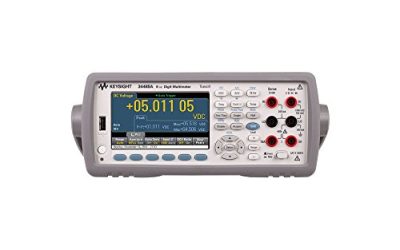
| Keysight 34465A Truevolt Digital Multimeter | Precision reference work and digitizing | 6.5-digit Truevolt DMM with digitizing |
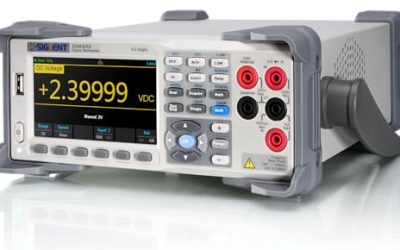
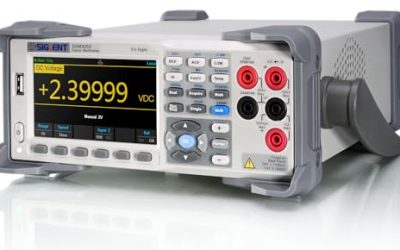
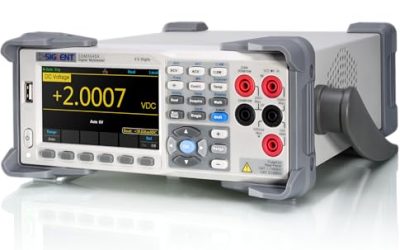
| Siglent SDM3065X Digital Multimeter | High-resolution work on a smaller outlay | 6.5-digit dual-display DMM, 2,200,000 counts |
| Rigol DM3058E Digital Multimeter | Everyday bench measurements with computer logging | 5.5-digit dual-display DMM, 123 readings per second |
| Keysight 34461A Truevolt Digital Multimeter | A first 6.5-digit meter for the bench | 6.5-digit Truevolt DMM, 2,000,000 counts |
How to Choose
Match the digits to the measurement
A digit is not a marketing label; it is the smallest change the meter can show. A 6.5-digit meter resolves a microvolt on a 1-volt range, which is what calibration, reference trimming, and drift tracking demand, while a 5.5-digit meter resolves ten times less and still covers most circuit work comfortably. The extra digit also brings tighter accuracy figures, but only if the bench is stable enough to use them: a noisy bench or a draughty room swamps the last digit of any meter. Buy the resolution the work needs, and remember that a 6.5-digit meter still needs a warm-up period and a stable temperature before its figures mean anything.
Weigh speed against stability
Fast readings catch drift and glitches; slow readings average noise away. A meter that samples 10,000 times a second can graph a settling regulator or catch a transient that a 123-readings-per-second meter misses entirely, yet that same speed shows every flicker of noise on a quiet DC rail. Most bench work lives in the middle: a few hundred readings a second with averaging turned on gives a steady number without hiding real movement. Look for a meter that lets the reading rate change, and for a trend or statistics mode that turns a stream of numbers into a picture of what the circuit is doing.
Plan the computer connection
A bench meter earns its place when its readings leave the front panel. USB suits a single meter beside a laptop, LAN suits a shared lab where several instruments log to one computer, and GPIB suits an existing rack of older instruments that already speaks that language. Check that the meter speaks SCPI, the common command language for test instruments, because that is what lets a script set ranges, trigger readings, and save results without touching the front panel. A meter with only a front-panel display is fine for spot checks, but any bench that logs data overnight needs a real interface and software that can use it.
Check ranges, safety, and bench space
Resolution means little if the meter cannot reach the signal. Confirm the voltage range covers the highest rail on the bench, the current range covers the load, and the resistance range covers the parts being checked, including a four-wire mode for low resistances where lead resistance would swamp the reading. Check the safety category as well: a CAT II 300 V rating suits bench electronics, while mains work needs a higher rating and different leads. Finally, measure the bench: a full-size meter with a deep case crowds a small workbench, while a compact meter leaves room for the soldering iron, the scope, and the circuit under test.
The 4 Best Options
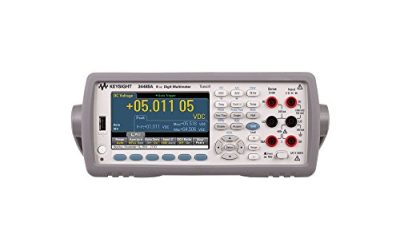
Keysight 34465A Truevolt Digital Multimeter

The 34465A is the most capable meter in this guide, built for benches where the measurement itself is the work. Its 6.5-digit Truevolt front end resolves a microvolt with an accuracy figure that holds up over a year, and its digitizing mode graphs fast signals that a normal meter would only show as a flickering number. The colour display shows the reading, a trend, and statistics at once, so drift and settling are visible without a separate computer. It suits calibration benches and characterization work where the last digit is a real requirement, not a luxury.
Specs
- 6.5-digit resolution, 1,200,000 counts
- Truevolt digital multimeter with digitizing function
- DC voltage accuracy 35 ppm basic
- Up to 5,000 readings per second
- 1000 V DC and 750 V AC maximum, 10 A AC and DC
- 4.3-inch colour graphical display
- LAN, USB, and GPIB interfaces
- Measures capacitance, temperature, frequency, and 2- and 4-wire resistance
Best for: Precision reference work, calibration benches, and digitizing fast signals.
Watch out for: The digitizing and deeper memory are what set this meter apart from the 34461A, so confirm the listing is the 34465A and not the lower model before ordering.
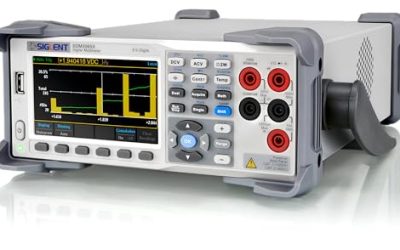
Siglent SDM3065X Digital Multimeter

The SDM3065X brings 6.5-digit resolution to benches that cannot justify a flagship meter, with a dual display that shows two measurements at once and a sampling rate that reaches 10,000 readings a second. Its colour screen and straightforward menu make it easy to live with day to day, and the LAN, USB, and GPIB interfaces cover logging and automation without extra hardware. It suits engineers who need genuine high resolution for reference work and drift checks, and who want the extra digits without the flagship badge.
Specs
- 6.5-digit resolution, 2,200,000 counts
- Dual-display digital multimeter with 4.3-inch TFT-LCD screen
- Up to 10,000 readings per second
- True RMS AC voltage and AC current measurements
- 1000 V DC and AC maximum, 10 A maximum
- LAN, USB, and GPIB interfaces
- 1 GB NAND flash memory for stored readings
- Optional scanner card version available (SDM3065X-SC)
Best for: High-resolution reference and drift work where the flagship meter is more than the bench needs.
Watch out for: Two different ASINs circulate for this model, so confirm the listing matches the SDM3065X and not the scanner-card version before ordering.
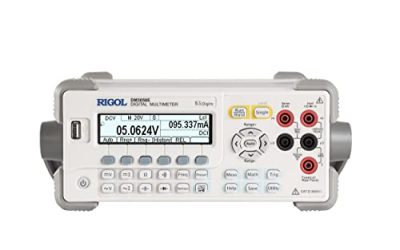
Rigol DM3058E Digital Multimeter

The DM3058E is the value pick of the four, a 5.5-digit meter that has been a bench staple for years because it does the common jobs well and logs them over USB and RS-232. Its dual display pairs a second quantity, such as frequency, with the main reading, and the pass/fail limit mode flags out-of-tolerance parts without a computer watching. It suits repair benches and general electronics work where 5.5-digit digits are plenty and the meter needs to be quick, rugged, and easy to drive from a script.
Specs
- 5.5-digit resolution with dual display
- True RMS AC voltage and AC current measurements
- Up to 123 readings per second
- 1000 V DC and 750 V AC maximum, 10 A AC and DC
- USB and RS-232 interfaces with SCPI support
- Pass/fail limit testing and 10 stored setups
- Measures 2- and 4-wire resistance, capacitance, frequency, diode, and continuity
Best for: Everyday repair and electronics bench work with computer logging over USB.
Watch out for: The E version has USB and RS-232 but no LAN or GPIB, so check the interfaces on the listing if the bench needs a network connection.
Keysight 34461A Truevolt Digital Multimeter

The 34461A is the entry point to Keysight’s Truevolt bench meters, a 6.5-digit instrument that replaces the long-serving 34401A with a graphical display and faster measurement handling. It resolves two million counts with a 35 ppm accuracy figure, which is more than most benches will ever ask of it, and its math and statistics modes turn raw readings into useful answers on the front panel. It suits engineers who want a first 6.5-digit meter with a trusted name, and benches where the meter will be used for years rather than replaced.
Specs
- 6.5-digit resolution, 2,000,000 counts
- Truevolt digital multimeter with graphical colour display
- DC voltage accuracy 35 ppm basic
- Up to 1,000 readings per second
- 1000 V DC and 750 V AC maximum, 10 A AC and DC
- LAN, USB, and GPIB interfaces
- Built-in math, statistics, and limit functions
- Replacement for the Keysight 34401A
Best for: A first 6.5-digit meter for a bench that needs trusted accuracy without the digitizing features.
Watch out for: This is the base Truevolt model, so check the listing for the 34461A name rather than the higher 34465A before ordering.
Which One Fits Your Situation
You calibrate and characterize circuits
Pick the Keysight 34465A. Its 6.5-digit front end and digitizing mode show drift and settling that the other meters hide, and the accuracy figure holds over a year of bench use. Log the readings over LAN and the calibration record writes itself. Just let the meter warm up first, since the last digit only means something on a stable bench.
You log measurements through the day
Pick the Siglent SDM3065X. Its 10,000-readings-per-second rate and dual display keep up with automated tests, and the LAN, USB, and GPIB interfaces cover every logging setup a bench is likely to have. The 1 GB of flash stores readings when no computer is attached. Confirm the ASIN on the listing first, since two codes circulate for this model.
You repair and troubleshoot electronics
Pick the Rigol DM3058E. Its 5.5-digit display is plenty for fault-finding, the dual display shows frequency beside voltage, and the pass/fail mode flags bad parts without a computer in the loop. USB and RS-232 logging cover the cases where a record matters. If the bench later needs a network connection, remember this version has no LAN.
You are setting up a first precision bench
Pick the Keysight 34461A. It gives the bench a genuine 6.5-digit meter with a trusted name at the lowest step into the Truevolt range, and its graphical display and math modes make it easy to learn on. It will still be the right meter years from now, when the bench has grown around it. Skip the digitizing features of its bigger sibling unless the work genuinely needs them.
Common Mistakes
- Buying the most digits on the shelf when the work only needs 5.5 digits and a faster reading rate.
- Ignoring the computer interface, then finding the meter cannot log data to the bench computer.
- Trusting the last digit before the meter has warmed up and the bench temperature has settled.
- Measuring low resistances with two wires, so the lead resistance swamps the part being measured.
- Assuming every listing of a model is the same variant, when scanner-card and interface versions carry different model suffixes.
Frequently Asked Questions
What does 6.5-digit resolution mean?
It means the meter can show up to 1,999,999 counts, so on a 1-volt range it resolves a microvolt. The extra digits matter for calibration, reference trimming, and drift tracking, where small changes carry real information. For general troubleshooting, a 5.5-digit meter shows everything the fault leaves behind.
Do I need LAN or GPIB on a bench meter?
Only if the bench logs data or automates tests. USB is enough for one meter beside a laptop, while LAN suits a shared lab and GPIB suits a rack of older instruments. A meter used only for spot checks works fine with no interface at all, but a bench that records overnight needs one.
Can a bench meter replace a handheld meter?
Not entirely. A bench meter gives higher resolution, a bigger display, and logging, but it stays on the bench and needs mains power. A handheld meter goes to the equipment, works on batteries, and checks live circuits in place. Most engineers keep both: the bench meter for measurement work and the handheld for field checks.
How often should a bench multimeter be calibrated?
Once a year is the usual interval for lab and production benches, and many makers state their accuracy figures over that period. A meter that has been dropped, repaired, or moved between very different temperatures deserves a check sooner. Keep the calibration certificate with the meter so the next user knows when it was last verified.